![Senchaku hongan nembutsu shu [Passages on the Selection of the Nembutsu in the Original Vow].](https://inlibris.com/wp-content/uploads/2026/03/img-bn68878.jpg)
![Senchaku hongan nembutsu shu [Passages on the Selection of the Nembutsu in the Original Vow]. – Bild 2](https://inlibris.com/wp-content/uploads/2026/03/img-bn68878-a.jpg)
![Senchaku hongan nembutsu shu [Passages on the Selection of the Nembutsu in the Original Vow]. – Bild 3](https://inlibris.com/wp-content/uploads/2026/03/img-bn68878-b.jpg)
![Senchaku hongan nembutsu shu [Passages on the Selection of the Nembutsu in the Original Vow]. – Bild 4](https://inlibris.com/wp-content/uploads/2026/03/img-bn68878-c.jpg)
![Senchaku hongan nembutsu shu [Passages on the Selection of the Nembutsu in the Original Vow]. – Bild 5](https://inlibris.com/wp-content/uploads/2026/04/img-bn68878-d.jpg)
![Senchaku hongan nembutsu shu [Passages on the Selection of the Nembutsu in the Original Vow]. – Bild 6](https://inlibris.com/wp-content/uploads/2026/03/img-bn68878-e.jpg)
![Senchaku hongan nembutsu shu [Passages on the Selection of the Nembutsu in the Original Vow]. – Bild 7](https://inlibris.com/wp-content/uploads/2026/04/img-bn68878-f.jpg)
![Senchaku hongan nembutsu shu [Passages on the Selection of the Nembutsu in the Original Vow]. – Bild 8](https://inlibris.com/wp-content/uploads/2026/03/img-bn68878-g.jpg)
![Senchaku hongan nembutsu shu [Passages on the Selection of the Nembutsu in the Original Vow]. – Bild 9](https://inlibris.com/wp-content/uploads/2026/04/img-bn68878-h.jpg)
![Senchaku hongan nembutsu shu [Passages on the Selection of the Nembutsu in the Original Vow]. – Bild 10](https://inlibris.com/wp-content/uploads/2026/04/img-bn68878-j.jpg)
![Senchaku hongan nembutsu shu [Passages on the Selection of the Nembutsu in the Original Vow]. – Bild 11](https://inlibris.com/wp-content/uploads/2026/04/img-bn68878-k.jpg)
![Senchaku hongan nembutsu shu [Passages on the Selection of the Nembutsu in the Original Vow]. – Bild 12](https://inlibris.com/wp-content/uploads/2026/04/img-bn68878-i.jpg)
The foundational work of Japanese Pure Land Buddhism, printed in the 13th century
Senchaku hongan nembutsu shu [Passages on the Selection of the Nembutsu in the Original Vow].
Tall 8vo (175 x 288 mm). 2 vols. 176 pp.; 104 pp. 6 columns per page, 16-17 characters each, ruled in gilt. Woodblock-printed in Chinese on de luxe decorated paper with gold and silver foil dust in the upper and lower margins. Each page printed on one side only, blank versos pasted together, as issued. Pasted-leaf binding; old indigo covers. Stored in a modern wooden box.
€ 165.000,00
One of the earliest printings of Honen’s defining doctrinal statement, preserved complete in two books and on sumptuous gold- and silver-sprinkled paper. The present copy unites an early survival of the Senchaku hongan nembutsu shu with a level of material refinement rarely encountered in Buddhist printing, the old indigo covers and pasted-leaf structure underscoring the prestige accorded to the text.
Compiled in 1198 at the request of Kujo Kanezane, the work gathers scriptural authorities and exegetical citations to establish the nembutsu as the practice chosen in Amida’s Original Vow. In so doing, Honen (1133-1212), the monk who founded the Japanese Pure Land school, gave the movement its clearest and most lasting expression. Rather than simply summarizing devotion to Amida, the book argues that invoking Amida’s name was sufficient to make salvation accessible to ordinary believers in the age of mappo, the latter days of Buddhist law.
The treatise is seminal not only within Jodo thought, but also in the larger history of Kamakura Buddhism. Its arguments provoked immediate response from rivals and disciples alike, and its transmission shaped the intellectual formation of later Pure Land lineages; in modern scholarship it is regularly counted among the most consequential religious writings of medieval Japan.
The present edition carries that authority into the world of thirteenth-century book production. A Nanbokucho imprint of so central a text belongs to the earliest phase of its post-authorial dissemination, when the writings of Honen were being stabilized, copied, contested, and ceremonially preserved within temple culture. That this witness was executed as a special Pure Land edition is of particular importance: it shows the text being treated not as a merely utilitarian doctrinal handbook, but as a revered object of transmission.
The physical character of this edition is accordingly exceptional. The specially prepared sheets are scattered with gold and silver foil dust across the upper and lower margins, transforming the page into a liturgical surface of remarkable brilliance. Combined with the old indigo covers and the pasted-leaf format, these features mark the set as a deliberately elevated copy, produced not only for reading and doctrinal study, but also for display and veneration within a Pure Land Buddhist milieu.
At least one other specimen of this edition is recorded: that at Bukkyo University Library, Kyoto, dated to the Kencho era, 1249-1256, and described in a 1997 exhibition catalogue (cf. below) as a two-volume pasted-leaf Senchaku hongan nembutsushu printed in Kyoto, is digitized in full by the library. Page-by-page comparison with that digital facsimile confirms the present copy as identical not only in collation, but the first volume is also clearly printed from the same woodblocks. While the Bukkyo copy is on ordinary paper and the gold decoration is limited to the insides of the covers, our copy takes the luxury treatment further, with gold and silver foil dust scattered across the upper and lower margins of the text leaves themselves.
French Private Collection.
A few small tears or paper flaws to edges, margins and gutters, mainly confined to beginning and end of both volumes, all professionally repaired, as are the inner hinges; very occasional light staining, but still a highly appealing survival.
OCLC 1183299857 (Bukkyo University Library, Kyoto). Robert E. Buswell, Jr., and Donald S. Lopez, Jr. The Princeton Dictionary of Buddhism (Princeton, 2014), s. v. "Senchakushu". Honen's Senchakushu. Passages on the Selection of the Nembutsu in the Original Vow (Senchaku hongan nembutsu shu), transl. and ed. by Senchakus hu English Translation Project (Honolulu, 1998). Tokyo National Museum. Honen and Pure Land Buddhism (Tokyo, 2024).
Tokyo National Museum. Honen and Shinran: Treasures Related to the Great Masters of the Kamakura New Buddhism (Tokyo, 2011). Shin toshokan kaikan kinen: Bukkyo daigaku toshokan zo kichosho zuroku (Illustrated Catalogue of Rare Books in the Library of Bukkyo University, Commemorating the Opening of the New Library; ed. Kunieda Rikyu, Kyoto, Bukkyo University Library, 1997).
Bukkyo University Library Digital Collections, Sentaku hongan nenfutsu-shu kencho-ban maki dainiju.
Ähnlich
-

Album of 107 brush drawings, collected by Amiot in China and partly used …China, ca. 1780.
€ 250.000,00 -
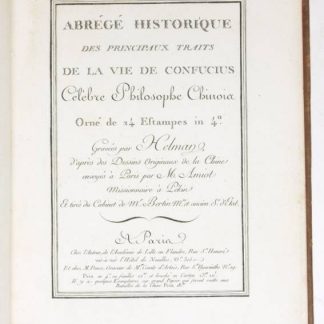
Abrégé historique des principaux traits de la vie de Confucius.Paris, 1788.
€ 3.500,00 -

Hyakumanto Dharani.Japan, Nara Prefecture, Nara period 764-770 CE.
€ 70.000,00 -
Daihannya-kyo (Mahaprajnaparamita sutra). Books 1 and 100.Japan, Nara, 1227.
€ 75.000,00
![Senchaku hongan nembutsu shu [Passages on the Selection of the Nembutsu in the Original Vow].](https://inlibris.com/wp-content/uploads/2026/03/img-bn68878-324x324.jpg)