

Egyptian hieroglyphs: "Se procurer la protection des dieux sur la récolte des grains"
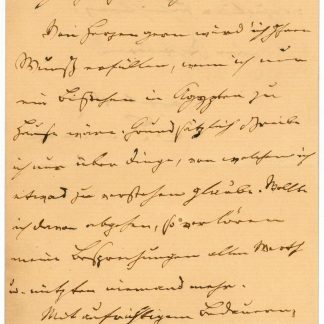
A scholar's handwritten letter.
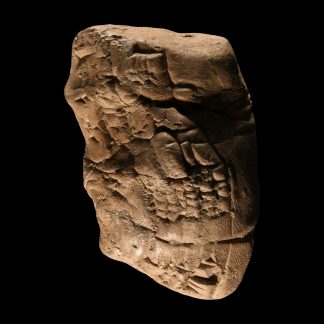
4to (172 x 224 mm) 6 pp. on bifolia. With two red wax seals showing hieroglyphic characters and Greek letters found on an Egyptian stone and an ink copy of the Greek inscription.
€ 2,500.00
Unsent draft letter to the scholar and numismatist Claude Gros de Boze, secretary of the Académie des Inscriptions et Belles-Lettres in Paris. The unidentified writer describes his archeological discovery of a square Egyptian basalt stone engraved with nine hieroglyphs on one side and three Greek words on the other. He glosses the Greek words to mean "calm", "abstinence", and "precept", and relates them to the hieroglyphs showing the harvest gods Osiris and Thot, suggesting that the stone may be an apotropaic amulet intended to secure a bountiful grain harvest ("un preservatif ou une amulette, qu'on avoir pour se procurer la protection des dieux sur la récolte des grains").
The draft, which contains many corrections and revisions, provides a detailed account of the hieroglyphs: "Le dieu Oziris debout à la teste du dieu Ibis ; cette figure tient un tridan renversé à la main, qu'il apuye sur un crocodille [...] Aux deux côtés de cette figure, près du crocodille s'élèvent deux serpens qui sont chez les Egiptiens le simbole de la vie ou du dieu Esculape; au dessus de ces serpens, on y remarque deux scorpions et deux éperviers qui ont chacun sur leur teste un boisseau, qui est l'attribut ordinaire du dieu Sérapis. Ce qu'il y a de plus singulier, c'est une main qui embrasse deux longues ailes d'oiseau" ("The god Osiris is standing on the head of the god Ibis [Thot], holding an inverted trident in his hand, which he rests upon a crocodile. To either side of the figure and near the crocodile, two serpents rise, which in Egyptian mythology represent either life itself or the god Asclepius. Above each serpent you can see a scorpion and a sparrowhawk wearing a head bushel, the attribute of the god Serapis. Most notable is the figure of a hand that embraces two long bird wings"). The writer continues to explain his understanding of the stone as a grain-harvest related artifact: "Ils avoient la précaution de bien labourer leurs terres dans un temps favorable, c'est à dire au mois d'octobre, ce qui est marqué par les deux scorpions ; pour les vents favorables qu'on appeloit vents éthésiens, ils sont marqués par deux éperviers qui ont chacun un boisseau sur la teste, qui désigne et fait connoitre qu'ils demandoient aux dieux une bonne récolte de grain" ("The Egyptians took the precaution of ploughing their land at a favourable time, the month of October, which is marked by the two scorpions; the favourable winds, called Aethetian winds, are marked by two sparrowhawks which each have a bushel on their head, which signifies that they were asking the gods for a good harvest of grain"). In conjunction with the gods Osiris and Thot, who stand for death and resurrection and therefore the cycles of the year, the other hieroglyphs and the Greek words suggest that the wearer of the stone intends to leave the fate of the harvest completely in the hands of the gods: "Laissant le tout a la providence des dieux".
Seals cracked.