
![Sokushingi Mitsudan-sho bassui [Extracts from Notes on the Esoteric Discussion of the Sokushin-gi].](https://inlibris.com/wp-content/uploads/2026/03/img-bn68875.jpg)
![Sokushingi Mitsudan-sho bassui [Extracts from Notes on the Esoteric Discussion of the Sokushin-gi]. - Image 2](https://inlibris.com/wp-content/uploads/2026/03/img-bn68875-a.jpg)
![Sokushingi Mitsudan-sho bassui [Extracts from Notes on the Esoteric Discussion of the Sokushin-gi]. - Image 3](https://inlibris.com/wp-content/uploads/2026/03/img-bn68875-b.jpg)
![Sokushingi Mitsudan-sho bassui [Extracts from Notes on the Esoteric Discussion of the Sokushin-gi]. - Image 4](https://inlibris.com/wp-content/uploads/2026/03/img-bn68875-c.jpg)
![Sokushingi Mitsudan-sho bassui [Extracts from Notes on the Esoteric Discussion of the Sokushin-gi]. - Image 5](https://inlibris.com/wp-content/uploads/2026/03/img-bn68875-d.jpg)
![Sokushingi Mitsudan-sho bassui [Extracts from Notes on the Esoteric Discussion of the Sokushin-gi]. - Image 6](https://inlibris.com/wp-content/uploads/2026/04/img-bn68875-f.jpg)
![Sokushingi Mitsudan-sho bassui [Extracts from Notes on the Esoteric Discussion of the Sokushin-gi]. - Image 7](https://inlibris.com/wp-content/uploads/2026/04/img-bn68875-g.jpg)
![Sokushingi Mitsudan-sho bassui [Extracts from Notes on the Esoteric Discussion of the Sokushin-gi]. - Image 8](https://inlibris.com/wp-content/uploads/2026/04/img-bn68875-h.jpg)
How Buddhahood may be realized in one’s present body: a 14th-century manuscript of 28 metres
Sokushingi Mitsudan-sho bassui [Extracts from Notes on the Esoteric Discussion of the Sokushin-gi].
Manuscript, complete in two scrolls (both 25 cm high, 15 and 13 meters long). Chinese text in black ink on kozo paper, 15-17 characters per column. Stored together in a fitted wooden case.
€ 110,000.00
An imposing medieval witness to one of the central ideas of Shingon Buddhism. This complete two-volume manuscript preserves extracts from Seishin's Sokushin-gi Mitsudan-sho, with a dated colophon by its scribe Kenpo, and thus offers an early and clearly dated example of the scholastic tradition that grew around Kukai’s doctrine that Buddhahood may be realized in one's present body.
Rather than transmitting the full commentary, the present manuscript preserves extracts chosen for direct use, a form that strongly suggests study, teaching, and doctrinal consultation within a monastic setting. Its appeal lies in that concentrated character: this is not a remote textual remnant, but a purposeful working manuscript shaped by repeated reading. Seishin, the commentator from whom it draws, belongs to the medieval Shingon exegetical tradition and is usually placed in the Kamakura period, even if his exact dates remain to be fixed more precisely.
The manuscript also records a repair by Gokai in Manji 2 (1659 CE), showing that it remained valued and usable more than three centuries after it was copied. That note provides the set with a further historical dimension, linking medieval production with early modern preservation in a particularly tangible way. As a dated Japanese Buddhist manuscript from 1352, it belongs to the great period of manuscript circulation that remained essential even after the spread of print, especially for sectarian, doctrinal, and study texts. Its survival as a complete two-volume set materially reflects the durability of scholastic book culture in medieval Japan. Related witnesses of the broader Sokushin jobutsu gi tradition are preserved at institutions such as Kongobuji (Mount Koya) and Todaiji (Nara).
Repaired by Gokai in Manji 2 (1659 CE). Minor insect damage; several tears to the margins throughout, still fine and crisp overall.
Kobo Daishi (Kukai), Sokushin jobutsu gi. In: Kobo Daishi zenshu (Tokyo, Yoshikawa Kobunkan, 1909-10). Seishin, Sokushingi Shoshinsho. In: Shingonshu zensho (Koyasan, Shingonshu Zensho Kankokai, 1933-36). Kukai, Major Works, ed. and transl. by Yoshito S. Hakeda (New York, Columbia UP, 1972).
Related
-
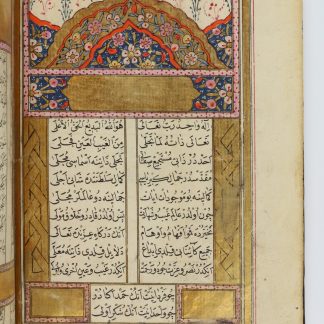
Kitab al-Muhammadiyah (Kitâbü Muhammediyye fî na'ti seyyidi'l-âlemîn …Ottoman Empire, 1600 / late 16th or early 17th century CE.
€ 12,500.00 -
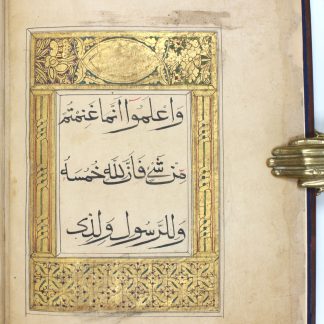
An illuminated Qur'an, Juz' X.China, ca. 1790 - later 18th century CE.
€ 9,500.00 -
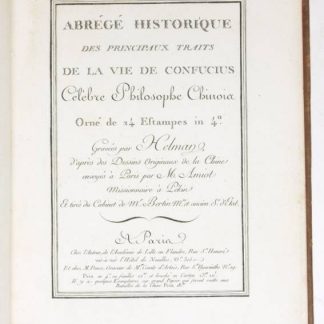
Abrégé historique des principaux traits de la vie de Confucius.Paris, 1788.
€ 3,500.00 -
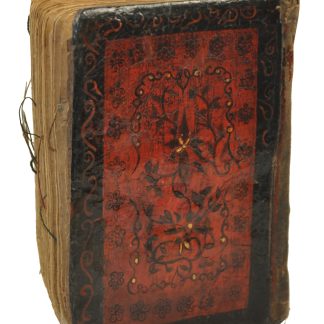
Dala'il al-khayrat ("Waymarks of Benefits").Eastern Turkestan, now Xinjiang, China, early 17th century CE.
€ 38,000.00
![Sokushingi Mitsudan-sho bassui [Extracts from Notes on the Esoteric Discussion of the Sokushin-gi].](https://inlibris.com/wp-content/uploads/2026/03/img-bn68875-324x324.jpg)