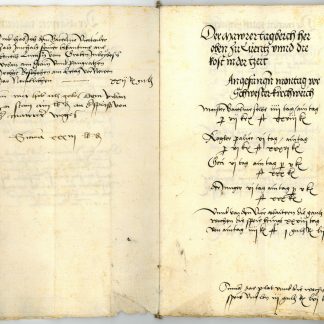
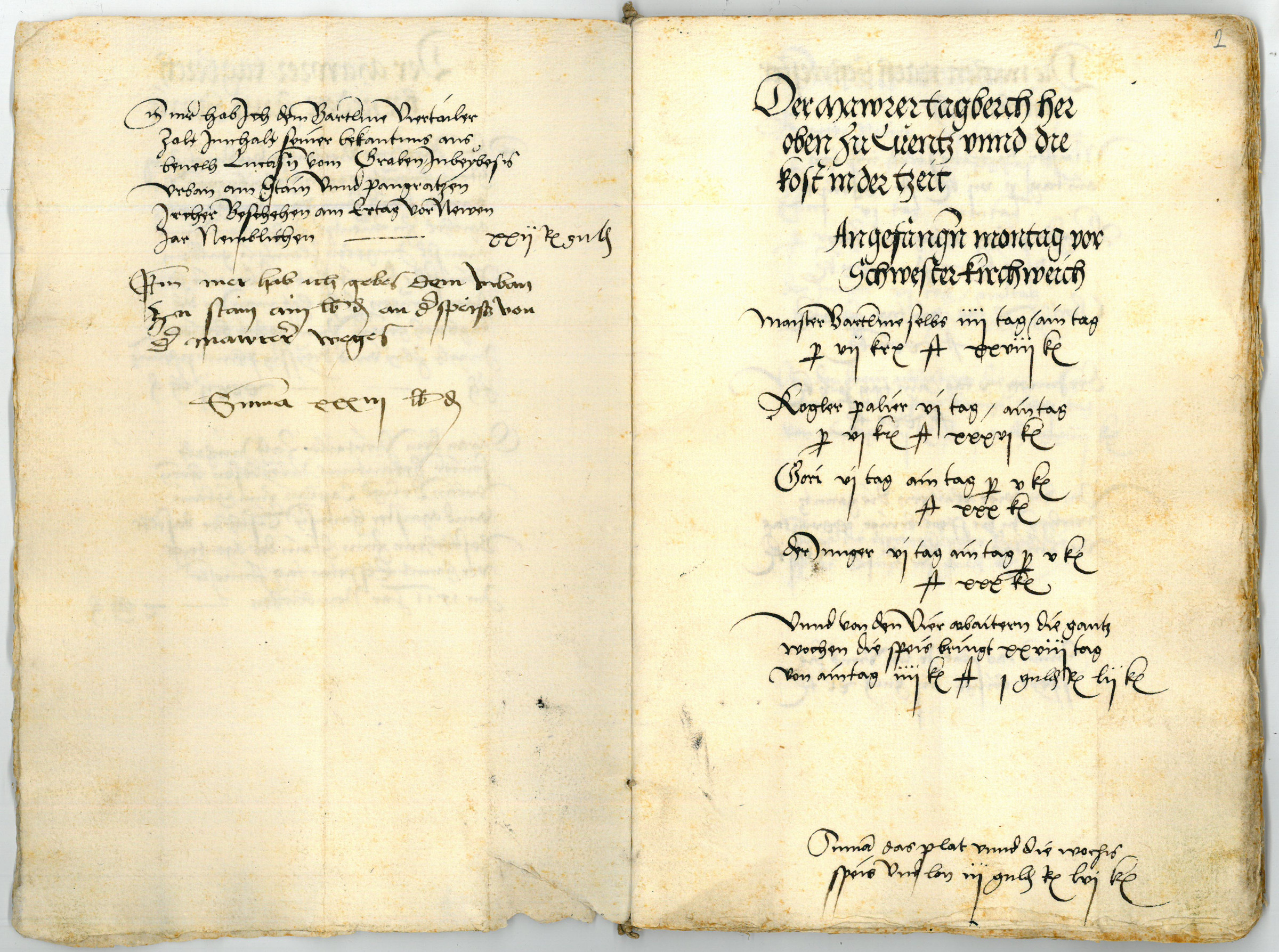
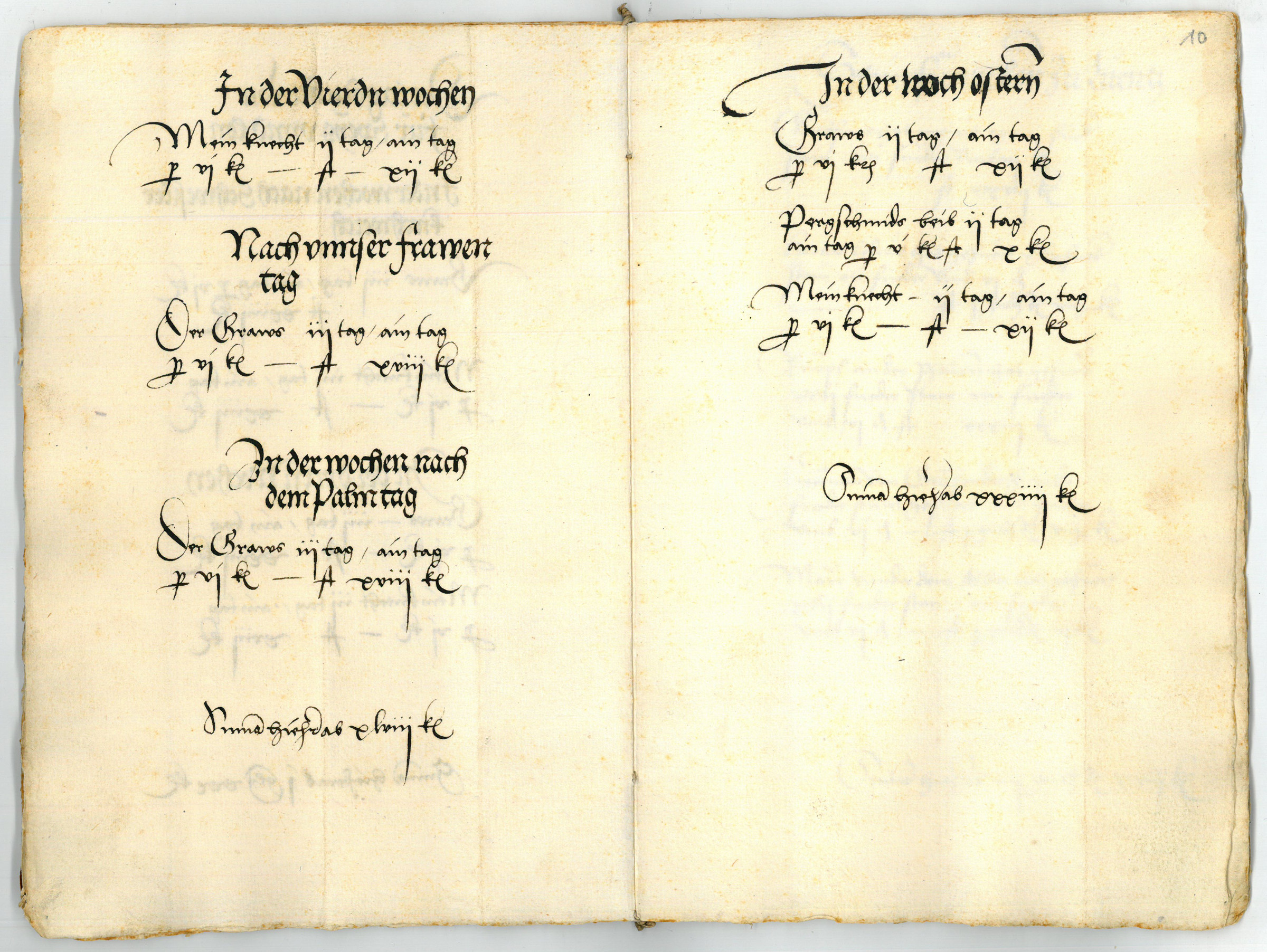
Account book of St Michael am Rindermarkt in Lienz.
8vo. German manuscript on paper. 25 inscribed pp. on 16 ff. In wrappers with the handwritten dating "1511".
€ 15,000.00
Unique written source material for the history of late medieval building, significant for art history as well as economic and social history. On the one hand, the manuscript proves useful for dating construction work at St Michael and provides important information about the persons in charge; beyond the inscriptions in some of his sacral buildings, the only known written source to name the builder Bartlmä Firtaler. On the other hand, it allows profound insights into the organisation of a late medieval construction site. While other manuscripts record the building of cathedrals or urban edifices, the example at hand lists the expenses of a small site in the periphery, covering about two months. The booklet was probably composed after the work was completed, drawing from notes constantly taken during the building process. It is arranged in several chapters, stating the weekly expenses for bricklayers and carpenters, for day works, the acquisition and transportation of stones, as well as other more general expenditures (such as the purchase of wood, nails, chains, saws, etc.). Expenses for sealing by the town judge, for an errand and for the workmen's wine supply complete the picture.
Bartlmä Firtaler, born around 1480, built many churches and chapels in Carinthia, Tyrol and Carniola/Slovenia; his debut work was the chapel at Stein Castle near Oberdrauburg in 1505. The lord of the castle, Lukas von Graben, who also appears in the manuscript, probably acted as the principal and financier of St Michael, which was to become the future burial site of the lords of Graben. The booklet records the offer of 22 guilders to Firtaler, which he did not accept ("damit hat er aber nit besteen mügen"), ultimately leading to a payment of 32 guilders. The episode illustrates Firtaler's esteem as a builder, as well as his self-confidence. Previous researchers did not assign St Michael in Lienz to Firtaler, or merely attributed to him works in the nave, dated around 1530, when he may have already been dead. The accounting booklet proves the entire church to be a product of Firtaler's first style period, which may have been inspired by Benedikt Ried's work in the Vladislav Hall in Prague Castle.
The expenses were listed by an unknown scribe, giving the total at the end of each page. The grand total of 83 guilders is given at the end of the booklet (a miscalculation, as the total reached by adding the sums of each page in fact amounts to 84 fl.). However, not only financial but also social circumstances connected with the Lienz building site can be reconstructed. The scribe distinguishes between masters and assistants, who are mentioned by name, and unskilled workers, whose names are not given. Personal names also appear in the expenses for the transportation of stones to Lienz, as well as in the general expenses, indicating sellers and handymen. These names could form the basis for further research, defining the roles of the historical players involved in the building of St Michael within the broader history of the town.
Related
-
Album amicorum der Ella Gräfin zu Lodron-Laterano und Castelromano (1880-1964).Graz, Himmelberg, Meran, Pula, Schönau am Königsee, Venedig u. a. O., 1894-1903.
€ 800.00 -
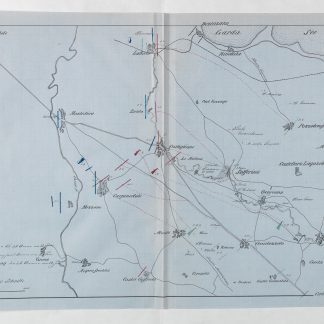
"Ein Beitrag zur Darstellung der Schlacht von Solferino am 24. Juni 1859". …O. O. u. D.
€ 2,800.00 -
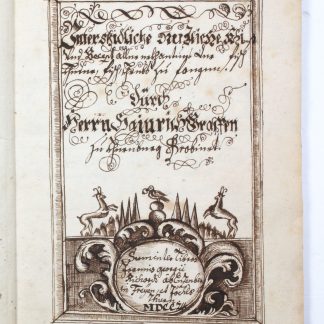
FischBiechlein. Unterschidliche nuzliche Khinst und Recept aller erkantnus …Probably Tyrol, 1724.
€ 6,500.00 -
!["Tyrol | Lechthal" und "Würtemberg [!] | (Schwenningen)". Eigenh. Manuskript.](https://inlibris.com/wp-content/uploads/2020/05/img-bn51886-324x324.jpg)
"Tyrol | Lechthal" und "Würtemberg [!] | (Schwenningen)". Eigenh. Manuskript.O. O. u. D.
€ 850.00