
![Kang-Ri you-ji zhan-zheng di yi-ban wen-ti [Common Problems in the Anti-Japanese Guerrilla War]. Signed.](https://inlibris.com/wp-content/uploads/2025/02/img-bn65623.jpg)
![Kang-Ri you-ji zhan-zheng di yi-ban wen-ti [Common Problems in the Anti-Japanese Guerrilla War]. Signed. - Image 2](https://inlibris.com/wp-content/uploads/2025/02/img-bn65623-a.jpg)
![Kang-Ri you-ji zhan-zheng di yi-ban wen-ti [Common Problems in the Anti-Japanese Guerrilla War]. Signed. - Image 3](https://inlibris.com/wp-content/uploads/2025/02/img-bn65623-b.jpg)
![Kang-Ri you-ji zhan-zheng di yi-ban wen-ti [Common Problems in the Anti-Japanese Guerrilla War]. Signed. - Image 4](https://inlibris.com/wp-content/uploads/2025/02/img-bn65623-d.jpg)
![Kang-Ri you-ji zhan-zheng di yi-ban wen-ti [Common Problems in the Anti-Japanese Guerrilla War]. Signed. - Image 5](https://inlibris.com/wp-content/uploads/2025/02/img-bn65623-c.jpg)
![Kang-Ri you-ji zhan-zheng di yi-ban wen-ti [Common Problems in the Anti-Japanese Guerrilla War]. Signed. - Image 6](https://inlibris.com/wp-content/uploads/2025/02/img-bn65623-e.jpg)
![Kang-Ri you-ji zhan-zheng di yi-ban wen-ti [Common Problems in the Anti-Japanese Guerrilla War]. Signed. - Image 7](https://inlibris.com/wp-content/uploads/2025/02/img-bn65623-f.jpg)
![Kang-Ri you-ji zhan-zheng di yi-ban wen-ti [Common Problems in the Anti-Japanese Guerrilla War]. Signed. - Image 8](https://inlibris.com/wp-content/uploads/2025/03/img-bn65623-g.jpg)
![Kang-Ri you-ji zhan-zheng di yi-ban wen-ti [Common Problems in the Anti-Japanese Guerrilla War]. Signed. - Image 9](https://inlibris.com/wp-content/uploads/2025/03/img-bn65623-h.jpg)
Mao Zedong's fundamental text on guerrilla warfare - an enormously rare signed example
Kang-Ri you-ji zhan-zheng di yi-ban wen-ti [Common Problems in the Anti-Japanese Guerrilla War]. Signed.
8vo (ca. 147 x 208 mm, untrimmed, gatherings unopened). (4), 98, (2) pp. With 5 folding charts and tables. Staple-bound original white wrappers, spine and front cover lettered in black with facsimile of Mao's calligraphy, additional autograph signature of Mao.
(With): Typed letter signed ("Jack Woddis") to Gordon Beeson of New Malden, Surrey, 14. March 1950, 1 p. (125 x 203 mm).
€ 350,000.00
The first appearance in book form of this fundamental text on the use of unconventional warfare in modern conflict, with a rare early signature of Mao and compelling provenance.
One of the most consequential modern books, the ideas in Mao's 1937 pamphlet On Guerrilla Warfare have been a constant influence in a post-colonial world. Tactics that included the use of small forces for intelligence gathering, surprise attacks and then retreat, and most crucially the recruitment of peasant populations to the cause, provided a framework for strategy within many of the "small wars" of the late 20th and early 21st century. Mao firmly believed that the addition of guerrilla action to an overall strategy could break the stalemates that occur when major powers are at war. The work’s influence was broad in the decades after World War II, influencing in particular Che Guevara to produce his own work on the subject - disseminating Mao’s ideas on warfare when agrarian and urban powers collide to the then emerging revolutionaries in South and Central America.
Mao's "Problems of Strategy in the Anti-Japanese Guerilla War" was first published in book form in "Common Problems in the Anti-Japanese Guerrilla War," an anthology of essays by communist writers published in 1938. It was issued as part of a three-volume series, together with "Lun chi jiu zhan" ("On Protracted Warfare") and "Kangri zhanzheng congshu" ("A Collection of Books for the Anti-Japanese War"), all edited by the Kangri zhanzheng yanjiuhui (Anti-Japanese War Research Committee) and sold by the Xinhua Bookstore in Mao's wartime base, Yan'an.
The accompanying letter from Jack Woddis, the International Secretary of the Communist Party of Great Britain, is addressed to Gordon Beeson, a Socialist from Surrey, acknowledging a substantial donation he had made: "[...] many thanks for the seven guineas. I enclose a copy of Mao Tse-Tung's 'Protracted War' [sic] with his signature written on the side of the cover. I am sure that this signed book will be a rare acquisition on your part, and I can assure you that the seven guineas will be put to good use in promoting Anglo-Chinese friendship [...]". Also present is a stamped tan envelope, presumably the one in which the book was sent, with typed label and ink inscription, probably by Beeson, indicating: "This is a first edition of 'Protracted War' by Mao Ts Sung [sic] and autographed by Mao himself on the back page. Should be very valuable someday". Beeson, a respected dealer in woodwind instruments and a skilled saxophone technician, was not himself a Communist, but a member of the Socialist Party of Great Britain since 1931.
1. Jack Woddis (1914-80), International Secretary of the Communist Party of Great Britain.
2. Gordon Beeson (1899-1985), British socialist and music dealer based in New Malden near Wimbledon, received in exchange for a donation to the CPGB.
Gatherings entirely unopened. Some toning to leaves, small chips to untrimmed edges, some loss to spine. Letter folded several times with apparent wear and some chips to edges, but without loss of text. An extraordinary rarity in excellent condition. OCLC records only three copies: at the Hoover Institution, Harvard University (lacking cover page), and the National Library of China.
OCLC 78310424.
Related
-
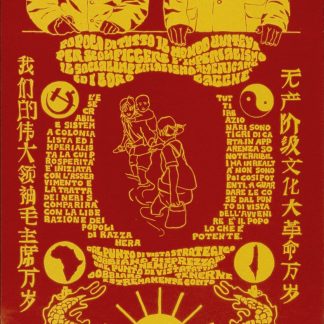
Manifesto. Continuare la rivoluzione e andare sempre avanti.Rome, c. 1971.
€ 8,500.00 -
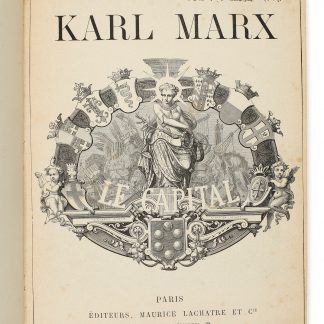
Le Capital. Traduction de M. J. Roy, entièrement revisée par l'auteur.Paris, 1872-1875.
€ 650,000.00 -
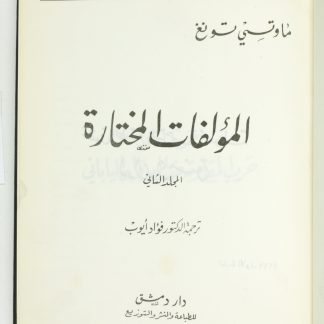
Selected Works of Mao Tse-tung, Volumes II and IV (in Arabic).Beirut, 1965.
€ 1,200.00 -
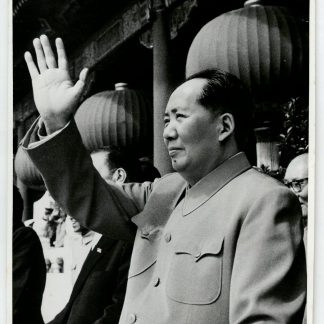
Autograph dedication signed.Beijing, 1960.
€ 185,000.00
![Kang-Ri you-ji zhan-zheng di yi-ban wen-ti [Common Problems in the Anti-Japanese Guerrilla War]. Signed.](https://inlibris.com/wp-content/uploads/2025/02/img-bn65623-324x324.jpg)