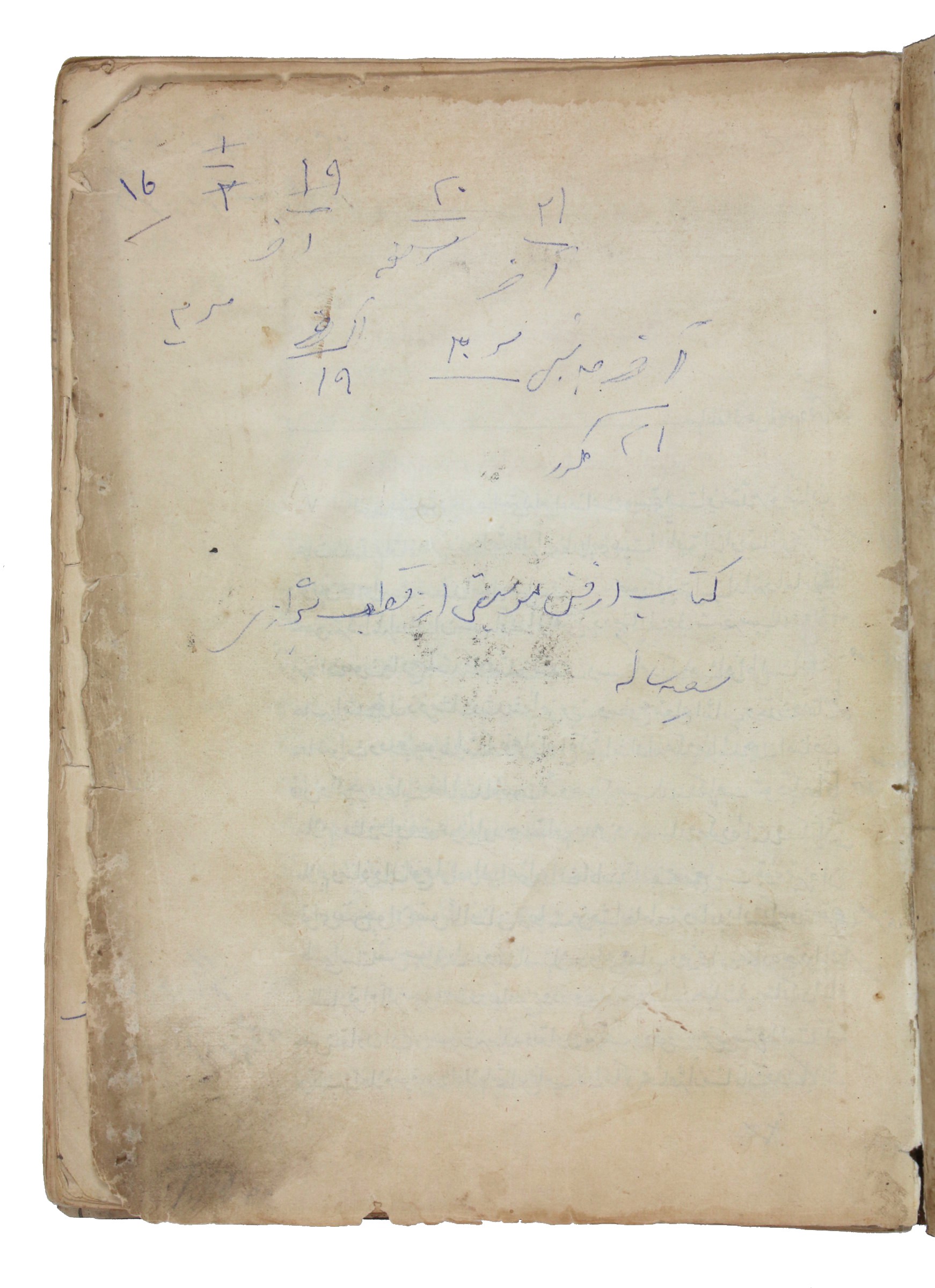
Persian musical theory from "The Pearly Crown"
Durrat al-Taj li Ghurrat al-Dibaj fi al-Musiqa.
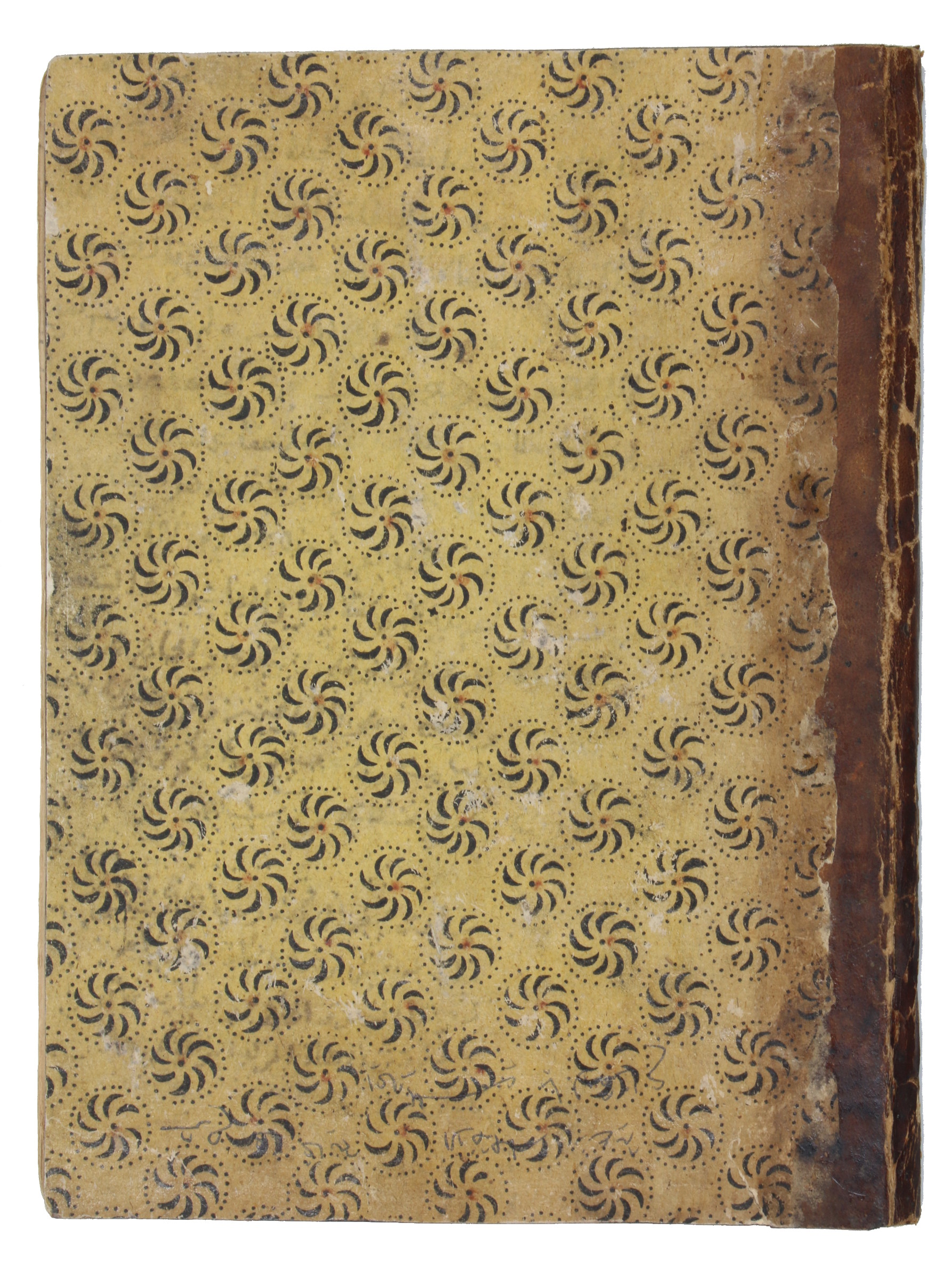
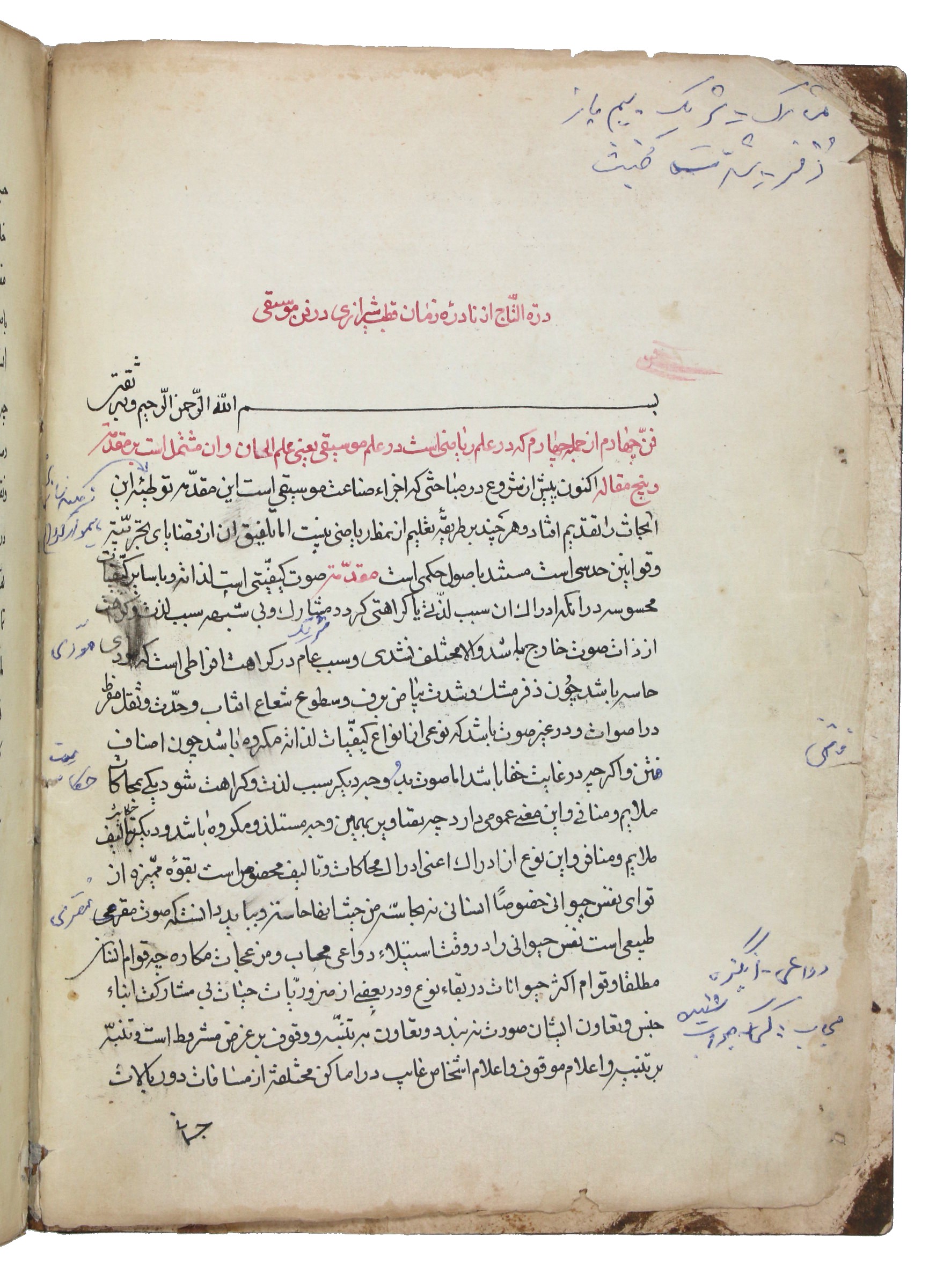
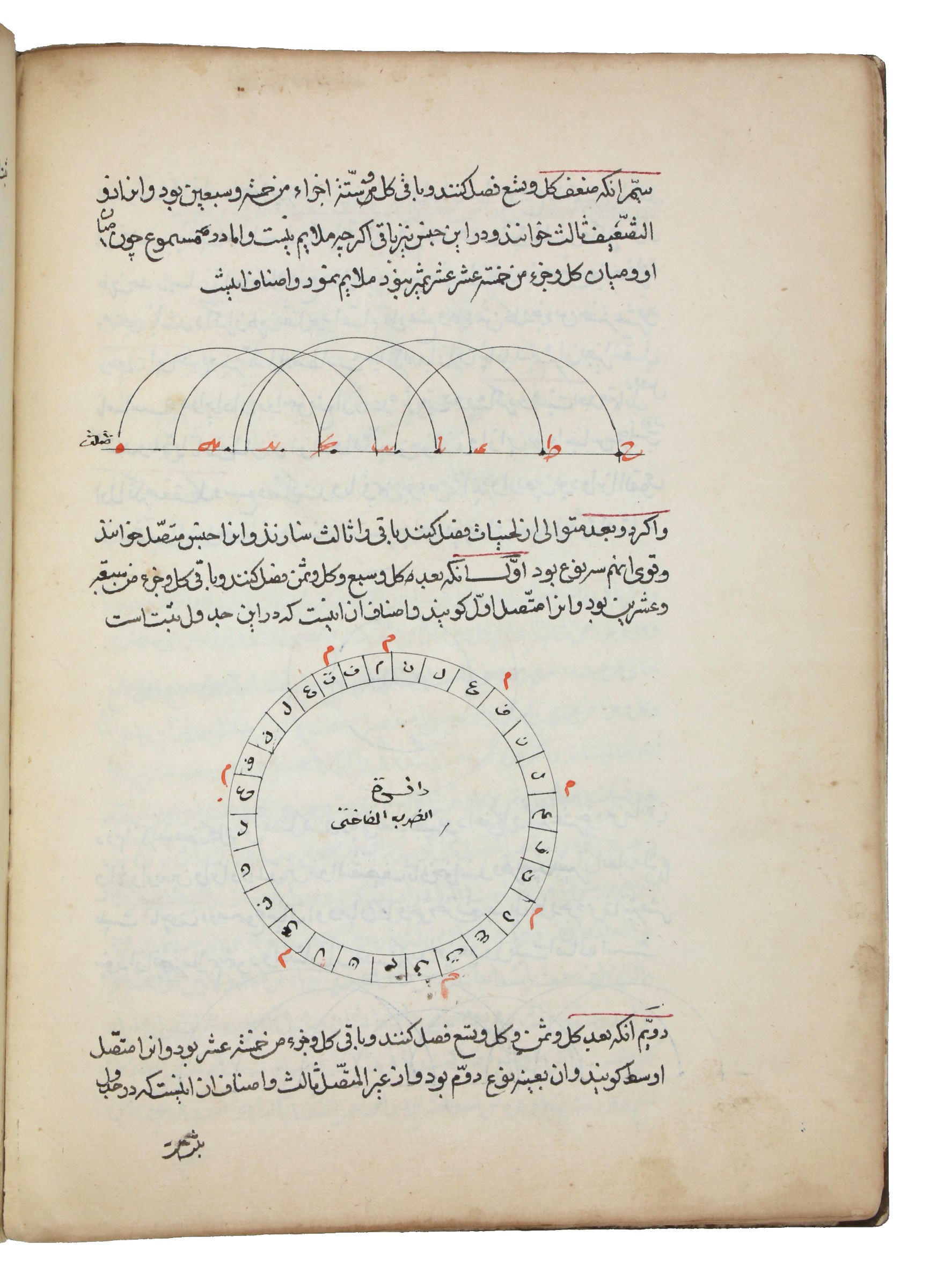
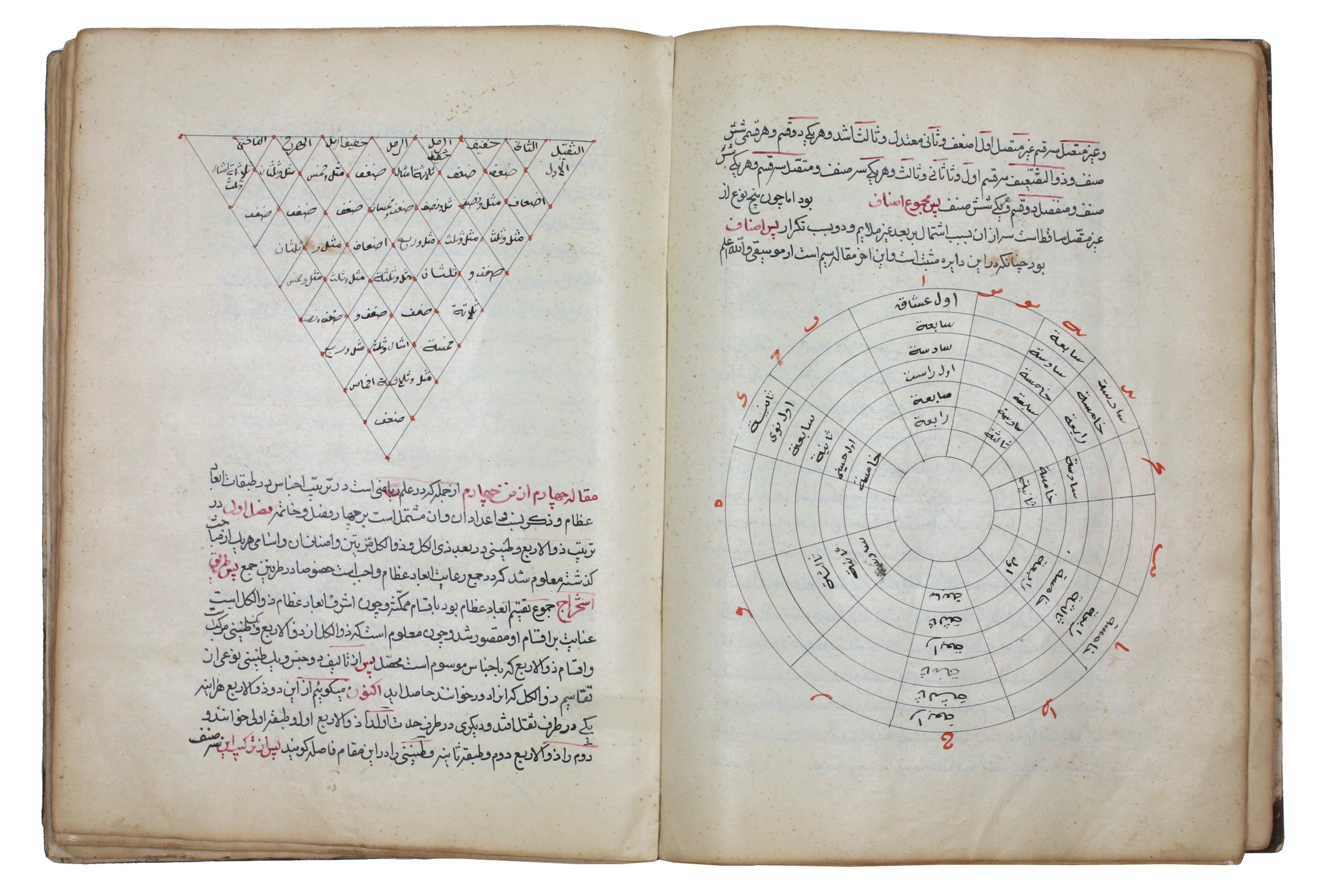
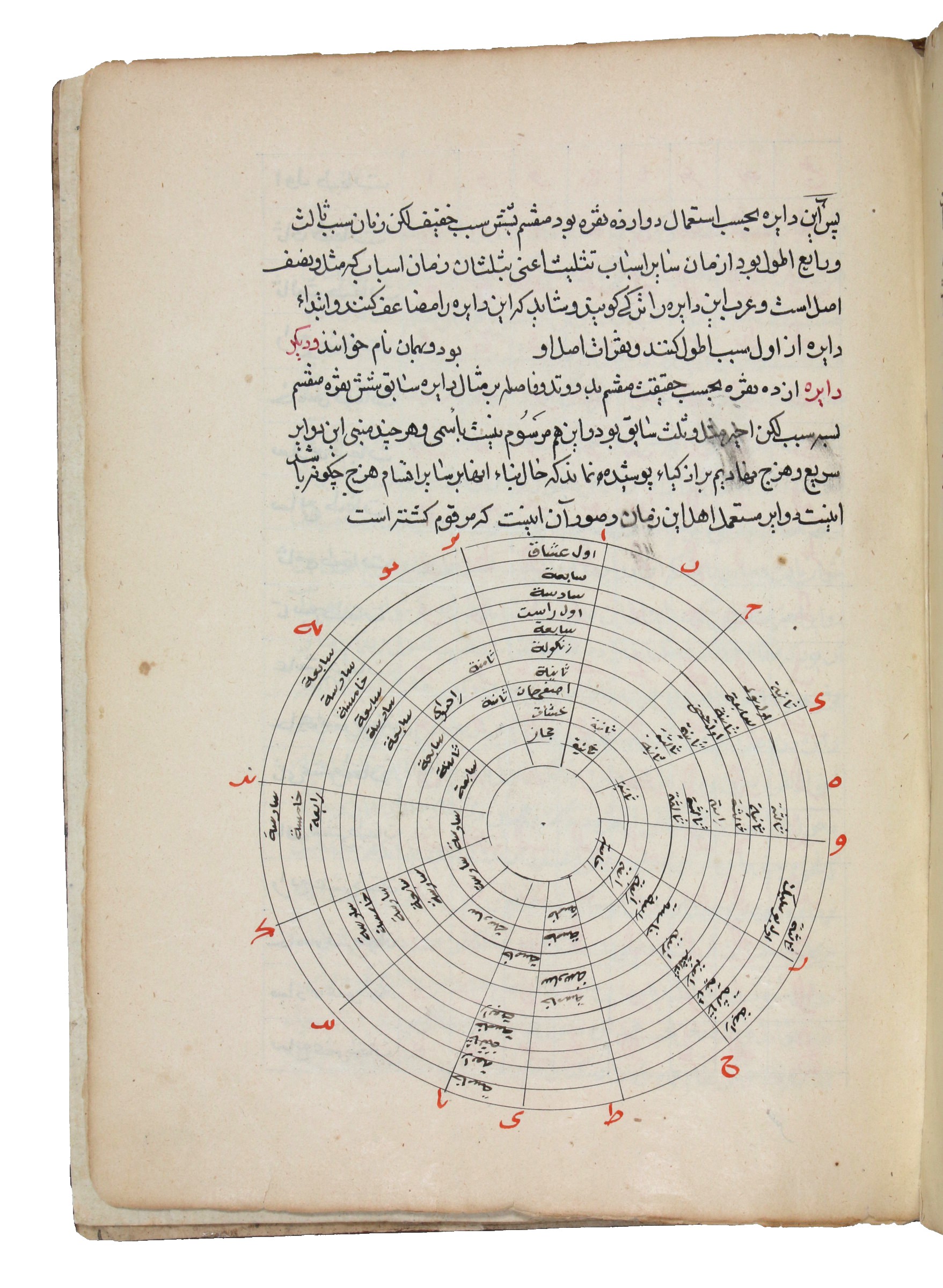
4to (164 x 213 mm). 57 ff. Persian manuscript on gold-flecked paper. In tidy black naskh script in 22 lines, with highlights and important words and phrases picked out in red. With numerous tables and diagrams. Contemporary leather-backed patterned boards.
€ 35,000.00
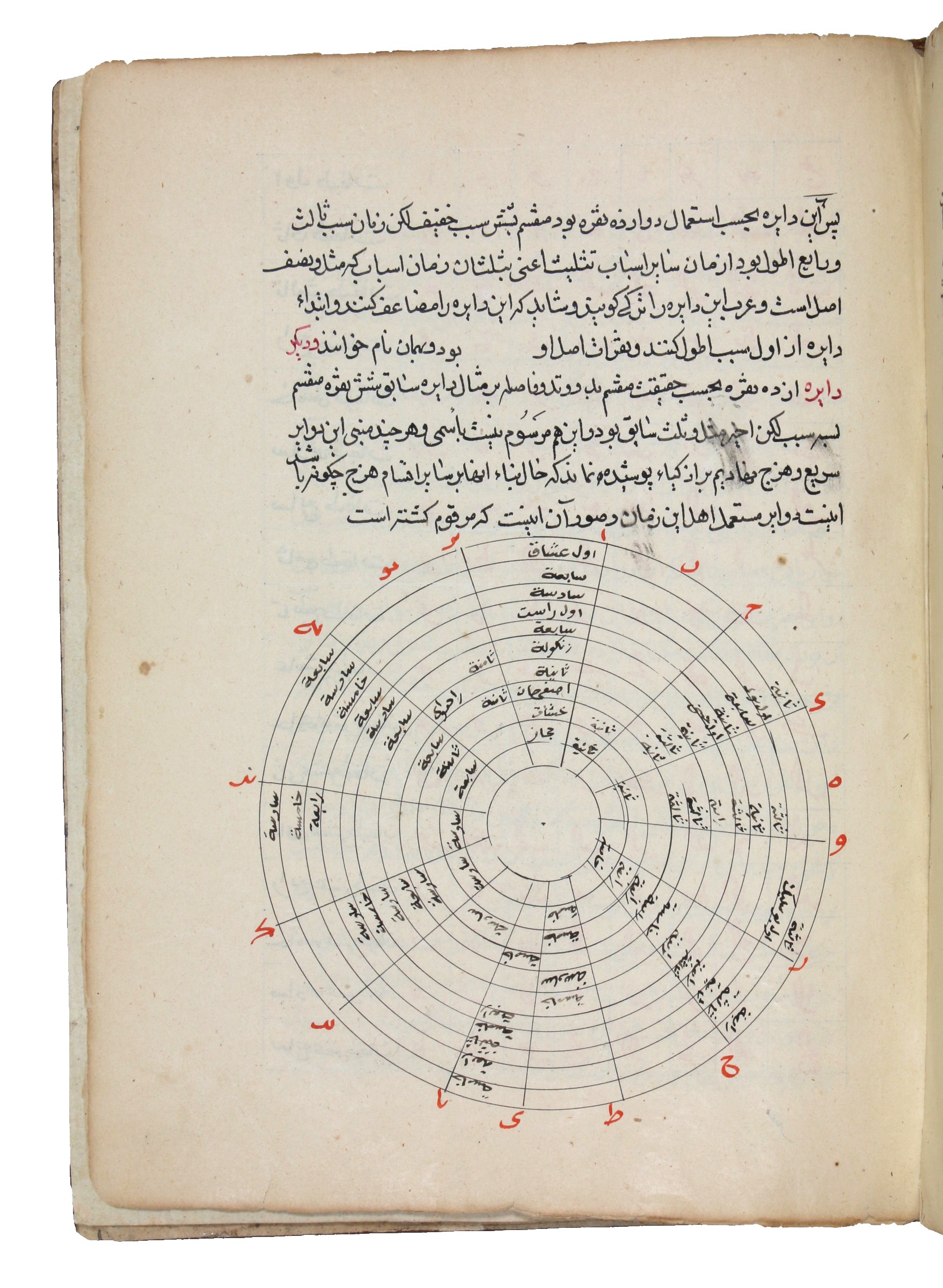
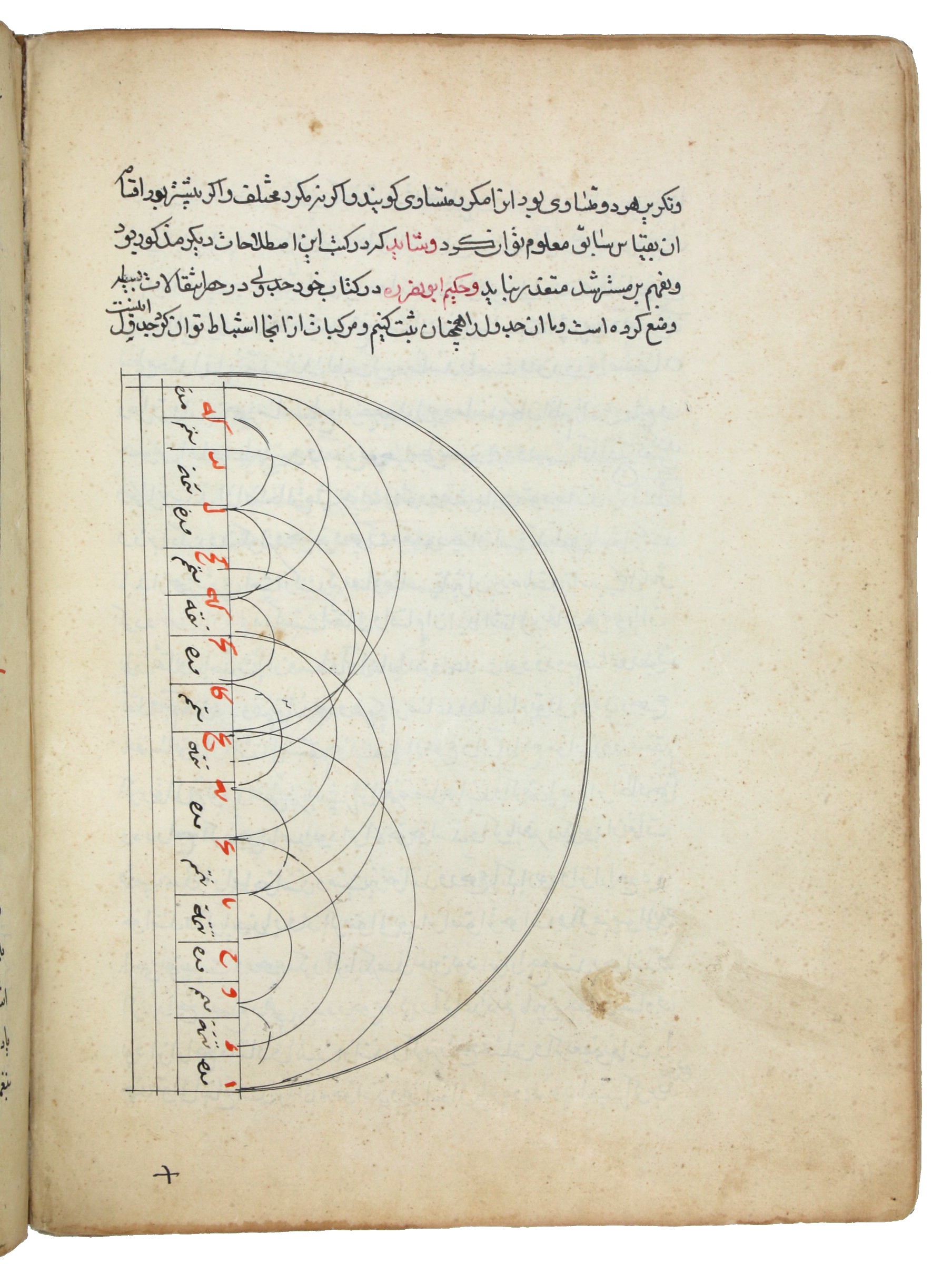
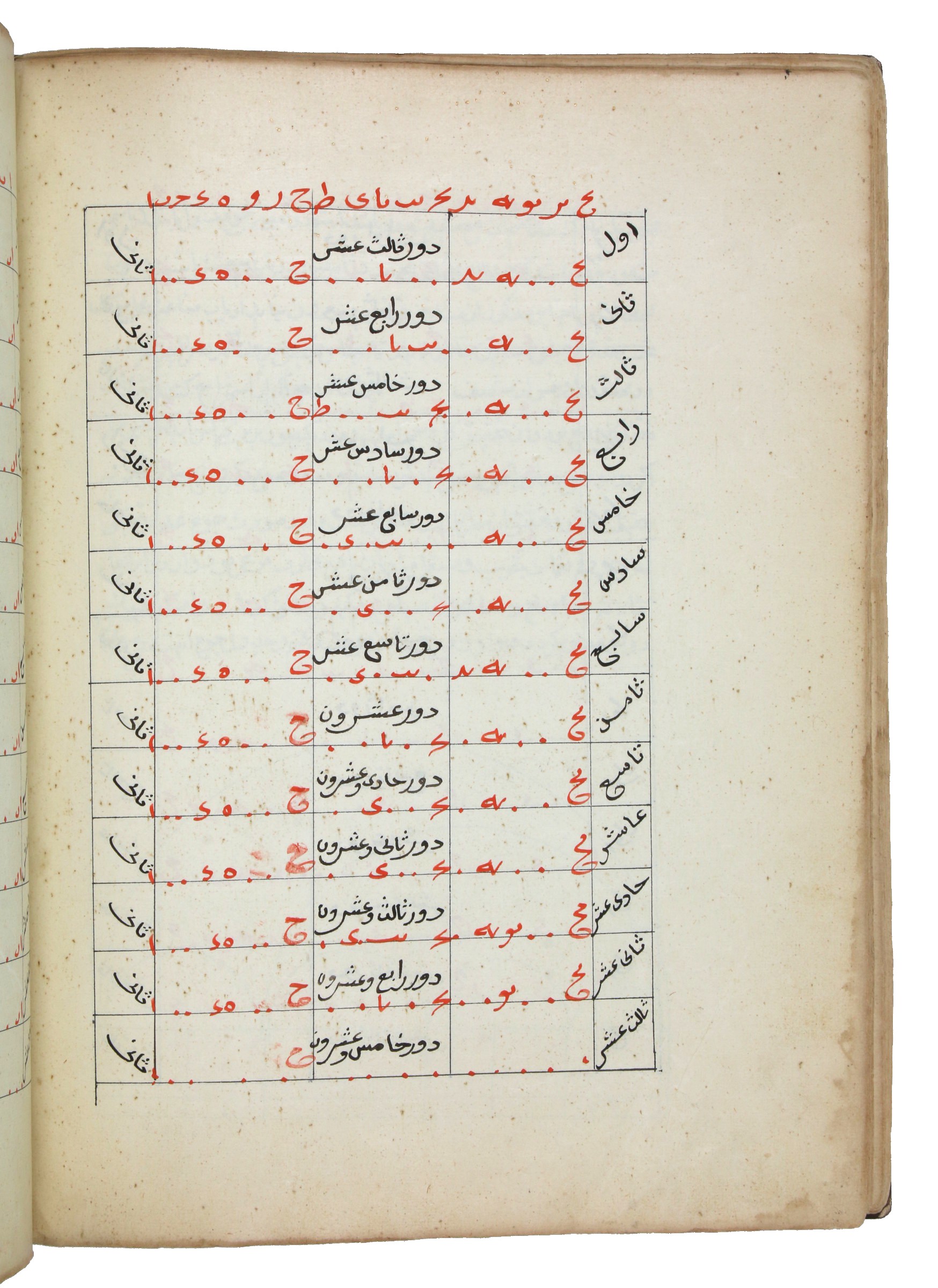
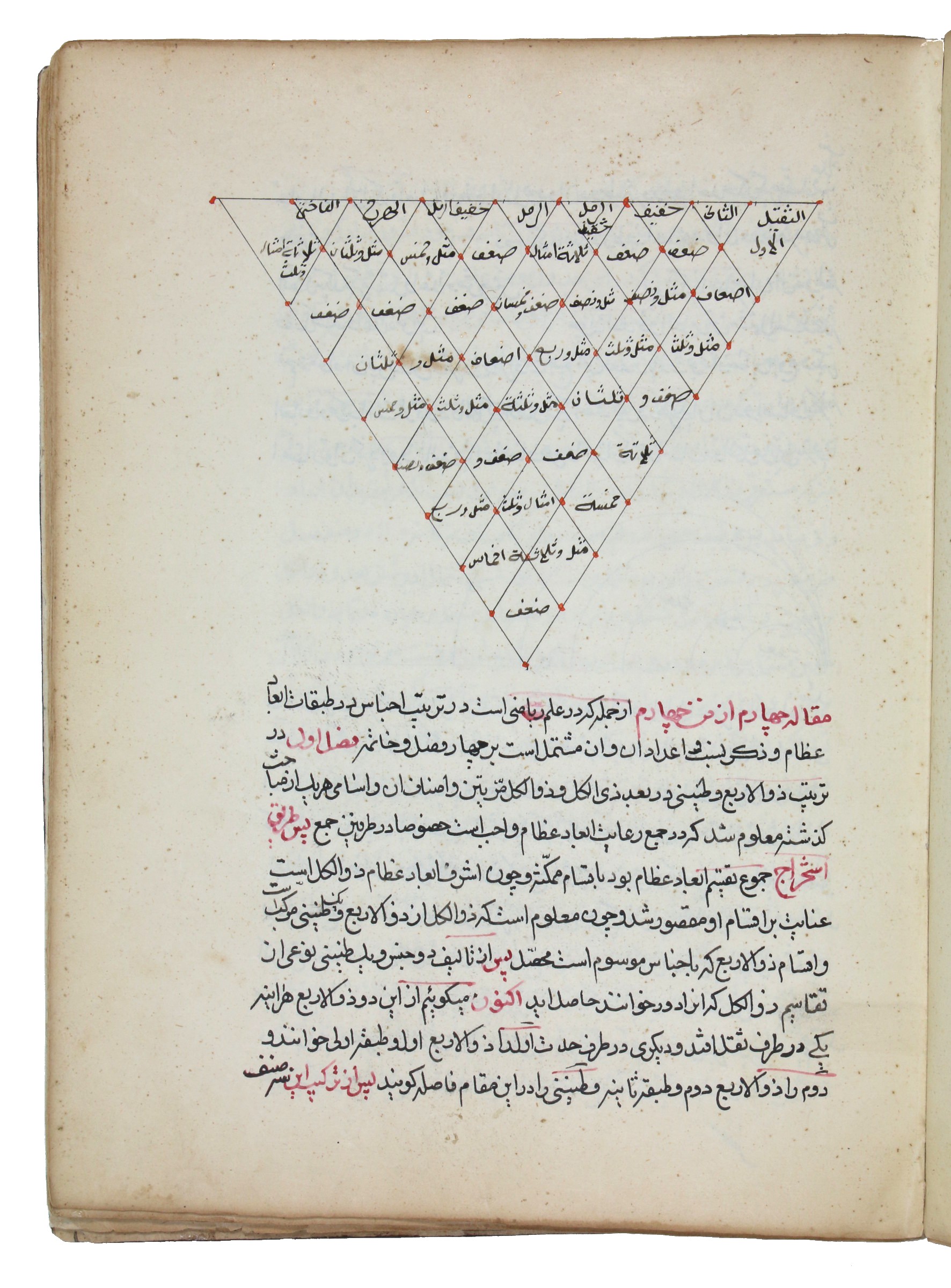
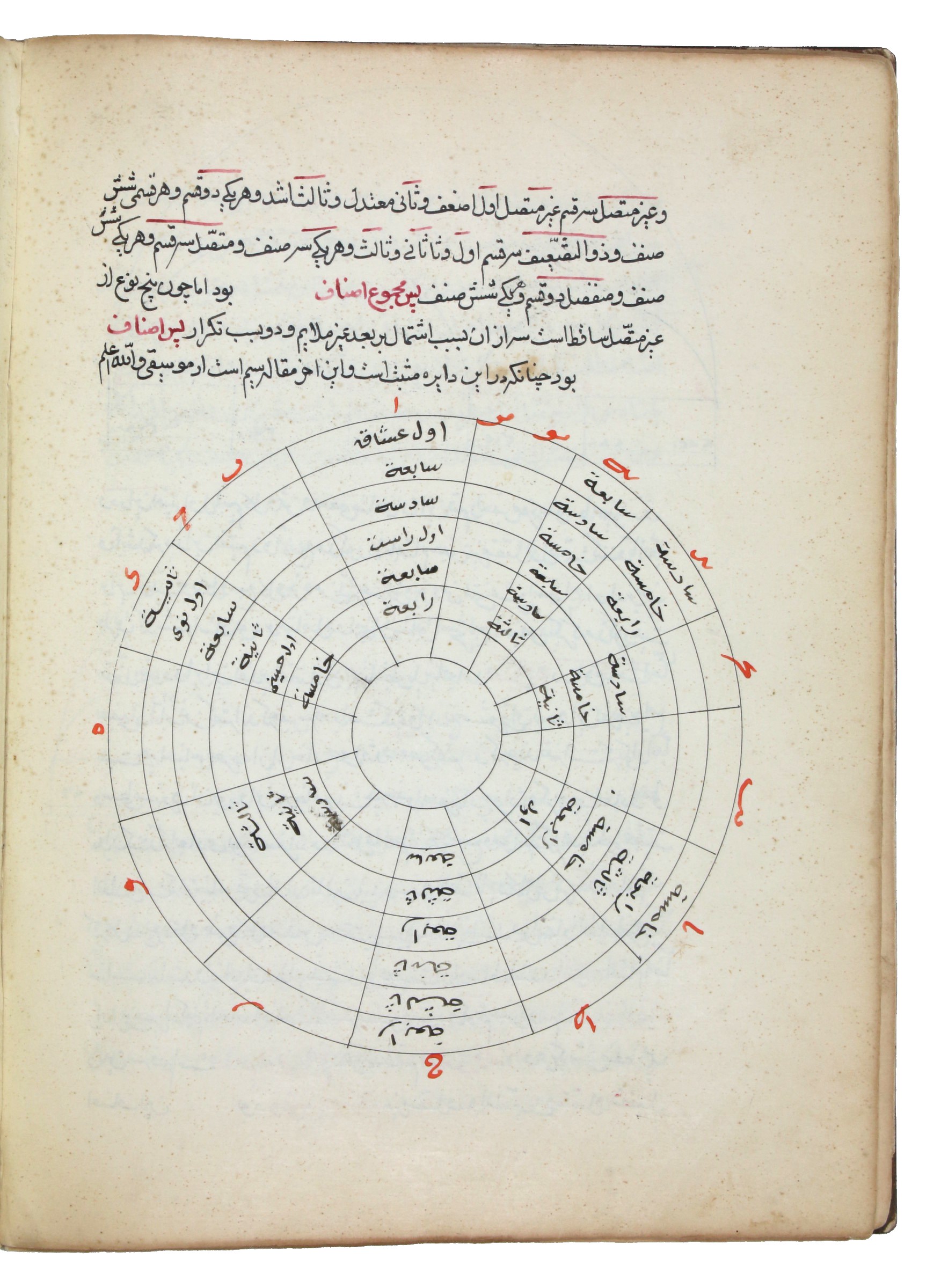
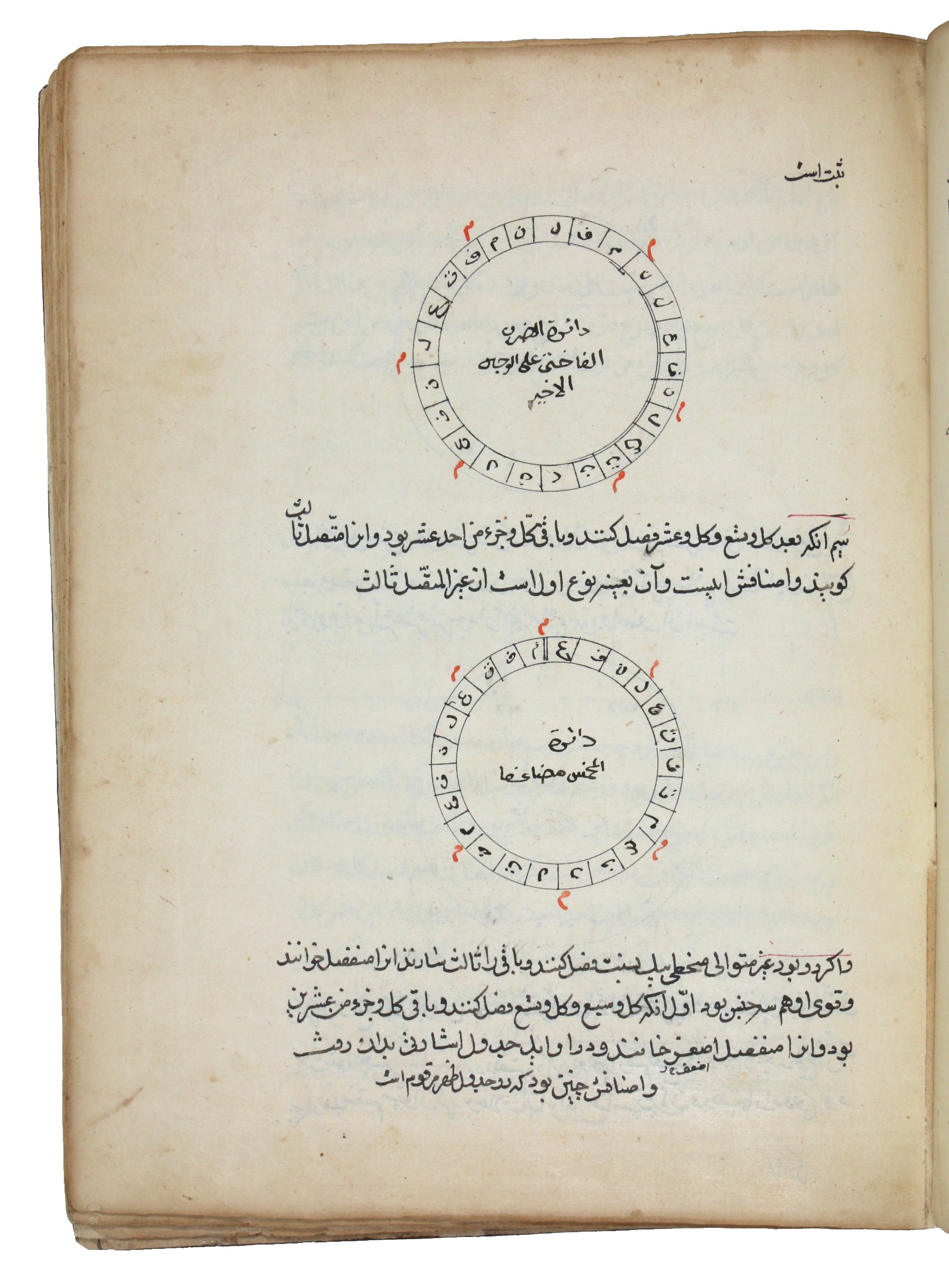
A section of Durrat al-taj li-ghurrat al-Dibaj (“Pearls of the Crown to Adorn Dibaj”), the most influential encyclopedic work of the Persian poet-polymath Qutb al Din al Shirazi (1236-1311). This manuscript preserves the fourth section of the fourth division, which is devoted entirely to the science of music. By the time Qutb al-Din composed his vast compendium between 1294 and 1306, musical theory in Persia had already become an advanced mathematical discipline. In this section, he sets out the nature of sound and its causes, the principles of consonance and dissonance, the division of scales and tetrachords, and the rules of the maqamat (modes) with their characteristic affects and systems of modulation. He further treats rhythmic cycles (iqaat) in their relation to poetic metre before concluding with a discussion of musical instruments, practical performance, and the ethical and therapeutic effects of music.
Presented in elegant Persian prose, the arguments are accompanied throughout by neatly ordered tables, charts, and geometrical diagrams, lending systematic clarity to the exposition. In shaping his treatise, Qutb al-Din drew upon the most authoritative predecessors: the Risala al-Sharafiyya fi 'l nasab al-Talifiyya by his near contemporary Safi al-Din al-Urmawi (d. 1294), the Kitab al-Musiqa al-Kabir of al-Farabi (d. 950), and the the chapter on music within the Kitab al-Shifa of Ibn Sina (d. 1037). Whilst firmly grounded in this earlier tradition, Qutb al-Din's work situates music within a wider encyclopedic context, alongside natural philosophy, logic, theology, astronomy, mathematics, ethics, and politics.
According to the colophon, this work was produced for Mirza Ahmad Ali, identified as a doctor and philosopher, copied in Shiraz by Ismail, son of Sahib, and completed in Ramadan 1151 AH (November/December 1738 CE).
Ownership mark on the last page by Dervish Sayyid Ali al-Shirazi in Muharram 1191 H (February/March 1777 CE).
Light external wear, a few minor hints of paper damage and repair, altogether in good condition.
Related
-
![[Persian astrological manuscript].](https://inlibris.com/wp-content/uploads/2022/11/img-bn60405-324x324.jpg)
[Persian astrological manuscript].No place, ca. 19th century CE.
€ 1,800.00 -
![[Naval logbook and diary]. Memorandum book.](https://inlibris.com/wp-content/uploads/2020/05/img-bn47805-324x324.jpg)
[Naval logbook and diary]. Memorandum book.Mainly Eastern Mediterranean, but including South America, the Caribbean, London and other places, chiefly 1835/1836 to 1838, with a few later entries to 1844.
€ 8,500.00 -
![Marifetname [The Book of Knowledge and Skills].](https://inlibris.com/wp-content/uploads/2020/05/img-bn47196-324x324.jpg)
Marifetname [The Book of Knowledge and Skills].Ottoman Empire, ca. 1760 CE.
€ 35,000.00 -
![Tahrir kitab usul al-Handasah li-Uqlidis [The Recension of Euclid's Elements].](https://inlibris.com/wp-content/uploads/2025/06/img-bn67626-324x324.jpg)
Tahrir kitab usul al-Handasah li-Uqlidis [The Recension of Euclid's Elements].Qajar Persia, 17 Nov. 1846 CE = 27 Dhu'l-Qa'dah 1262 H.
€ 8,500.00