

Some of the earliest compositions from one of the 20th century's greatest conductors
Musical sketches.
Various formats (from 255 x 340 to 273 x 357 mm). 73 pp., plus 7 blank.
€ 8,500.00
A collection of hitherto unknown early compositions by one of the greatest German conductors of the twentieth century. Although primarily known for his skill with a baton, Wilhelm Furtwängler considered composing his first love. Including pieces labelled "Op. I", "Op. II" and "Op. III", this collection comprises works from Furtwängler's teen years and possibly even before, offering a remarkable glimpse into his developing musical talents.
With numerous sketches, including "Fantasie I, Op. I", "Fantasie IV, Op. II" and "Cello Sonate, Op. III", the pieces all stem from the very earliest phases of Furtwängler's endeavours as a composer. He is known to have composed from 1893 onwards, when he was seven years old, and the still somewhat unpractised hand seems to confirm that some of these sketches are also probably this early. Furtwängler later reused the opus numbers I, II, and III (more than once), and none of our pieces appear to be listed in the Werkverzeichnis Wilhelm Furtwängler (WF). Furtwängler largely abandoned composing after 1905, which provides us with a terminus ante quem for these pieces. It was not until after the War that he resumed writing music in earnest, completing his most enduring work, the Symphony no. 2, in 1947.
One of Germany's most internationally famous classical musicians in the 1930s, Furtwängler was able to use his status and influence to help Jewish colleagues, and spoke out against the persecution of artists labelled "degenerate" by the regime, such as Paul Hindemith. Nonetheless, as he stayed in Germany and accepted the favour of the regime, he was considered by some to be an opportunist. His musical talent, however, has never been in doubt. Daniel Barenboim, one of the most celebrated conductors of the present day, has repeatedly cited Furtwängler as an inspiration.
A rarity: few Furtwängler musical manuscripts appear on the market, the last recorded sale being from 2005. The majority of his musical output was donated to the Zürich Zentralbibliothek by his widow Elisabeth in 1976.
A collection offering unique insights into the development of one of the twentieth century's greatest musical talents.
Dorotheum Vienna, 27 November 2023, Lot 198.
Some pages browned and with tears, mostly marginal. Some wear and staining but surfaces largely clean. With corrections and crossings-out, good examples of a composer's working sketches.
Not listed in Chris Walton, Wilhelm Furtwängler in Diskussion: sieben Beiträge. Werkverzeichnis (1996).
Related
-
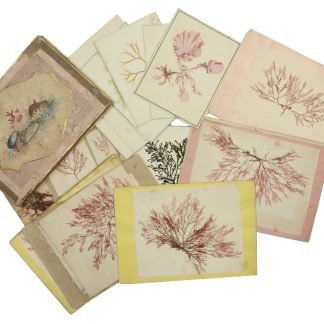
Herbarium.Mediterranean?, mid-19th century.
€ 1,500.00 -
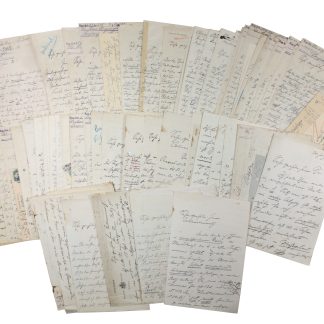
89 autograph letters and postcards signed.Leipzig, Meiningen, Tegernsee and other places, 1909-1915.
€ 35,000.00 -
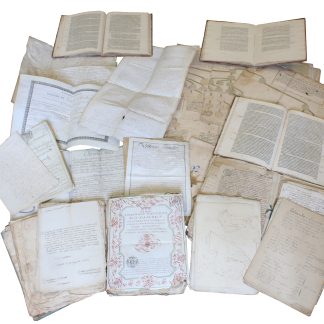
The personal archive of Luigi Colombo di Cuccaro (1790-1871).Mostly Montferrat and Castagnole near Genoa, Italy, 15th to 19th century.
€ 48,000.00 -
A diplomat's correspondence archive.Paris, Rome, Naples, Florence, Vienna, Munich and other places, September 1860 through January 1862, with additional items from 1854 to 1858.
€ 750.00
