


Flying for the RAF Persian Gulf Squadron
Set of Royal Air Force flying log books.
4to (200 x 220 mm). 2 pre-printed flight log books filled out by hand. Altogether (99) ff., 22 of which are blank printed forms. With several mounted images of aircraft and various training certificates, as well as some loosely inserted documents including confidential signals notes, pilot's examinations, and a letter from Pilot Officer R. L. Crowe requesting a Signals Officers course. Contemporary full cloth with black cover title.
Further includes a ms. notebook prepared by J. S. Wyatt with lecture notes: small 4to (160 x 202 mm). (74) ff., including several blanks. Contemporary card covers with handwritten cover title.
€ 5,000.00
Meticulous logbooks kept by William B. Jordan, reflecting his training and active service as a pilot in the RAF Persian Gulf Squadron at a time when WWII was drawing to a close.
Jordan trained as a pilot for almost two years, flying Miles Magisters, Tiger Moths, Martinets, Harvards, Yales, Ansons, Masters, Hurricanes, Wellingtons, Tomahawks, Walruses, and Spitfires across England and Canada (from Dunnville aerodrome, Ontario). Upon completing his training, Jordan served as a rescue pilot at No. 276 Air Sea Rescue Squadron from December 1943 to March 1944, rescuing downed airmen across the western part of the English Channel and the Bristol Channel. He then spent some 18 months at the gunnery flight sectors at Colerne and Culmhead, as well as at the Operational Training Unit at Rednal, Shropshire, his notes on his time there concluding with "8th May: VE Day!! Germany surrendered unconditionally". In May 1945 he joined No. 126 Persian Gulf Squadron, which at the time had already left the Middle East for the United Kingdom, mainly involved in bomber escort flights: the present logs mention his escorting 20 Lancaster bombers from Lille in May 1945. During his six months in the Persian Gulf Squadron, Jordan took part in a gunnery course at Bradwell Bay, aerobatics, flight formation and Balbo squadron exercises, as well as cross country and night flying. He logs a "2 day rest" after Japan surrendered unconditionally on 14 August, as well as a leave of absence to attend the Battle of Britain Anniversary, which involved a display over London by 300 fighter pilots.
An enclosed notebook prepared by Air Cadet J. S. Wyatt further adds to the archive's significance: titled "Magnetism Compasses Coding Reconnaissance", it contains lecture notes on instruments used for navigation, British, American and Japanese aircraft carriers, war ships and submarines, codes used for radio communication, as well as instructions for reconnaissance operations and anti-submarine warfare.
Bindings somewhat rubbed and a little spotted. Interior very well preserved.
Related
-

Libro utillissimo et molto necessario di varii secreti importantissimi …Italy, before 1581.
Inquire -
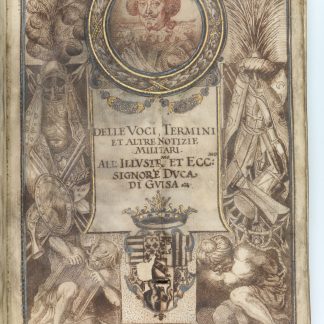
Delle voci, termini ed altre notizie militari.Florence, 1632/1639.
€ 9,500.00 -
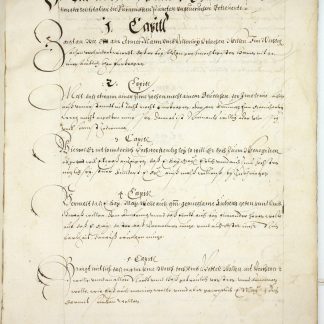
Dedication manuscript for Emperor Ferdinand I, written by a lieutenant …No place, 1560.
€ 25,000.00 -
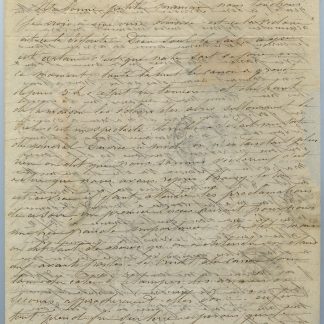
Autograph letter signed ("Marguerite") by a Paris citizen to her mother, …Paris, 29 Nov. 1870.
€ 3,500.00
