Early reference to the elusive Qur'an printed in Venice ca. 1520
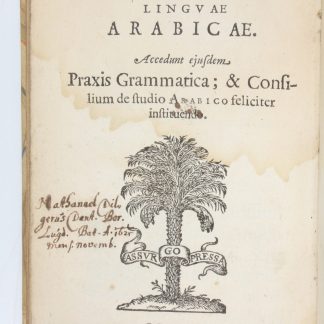
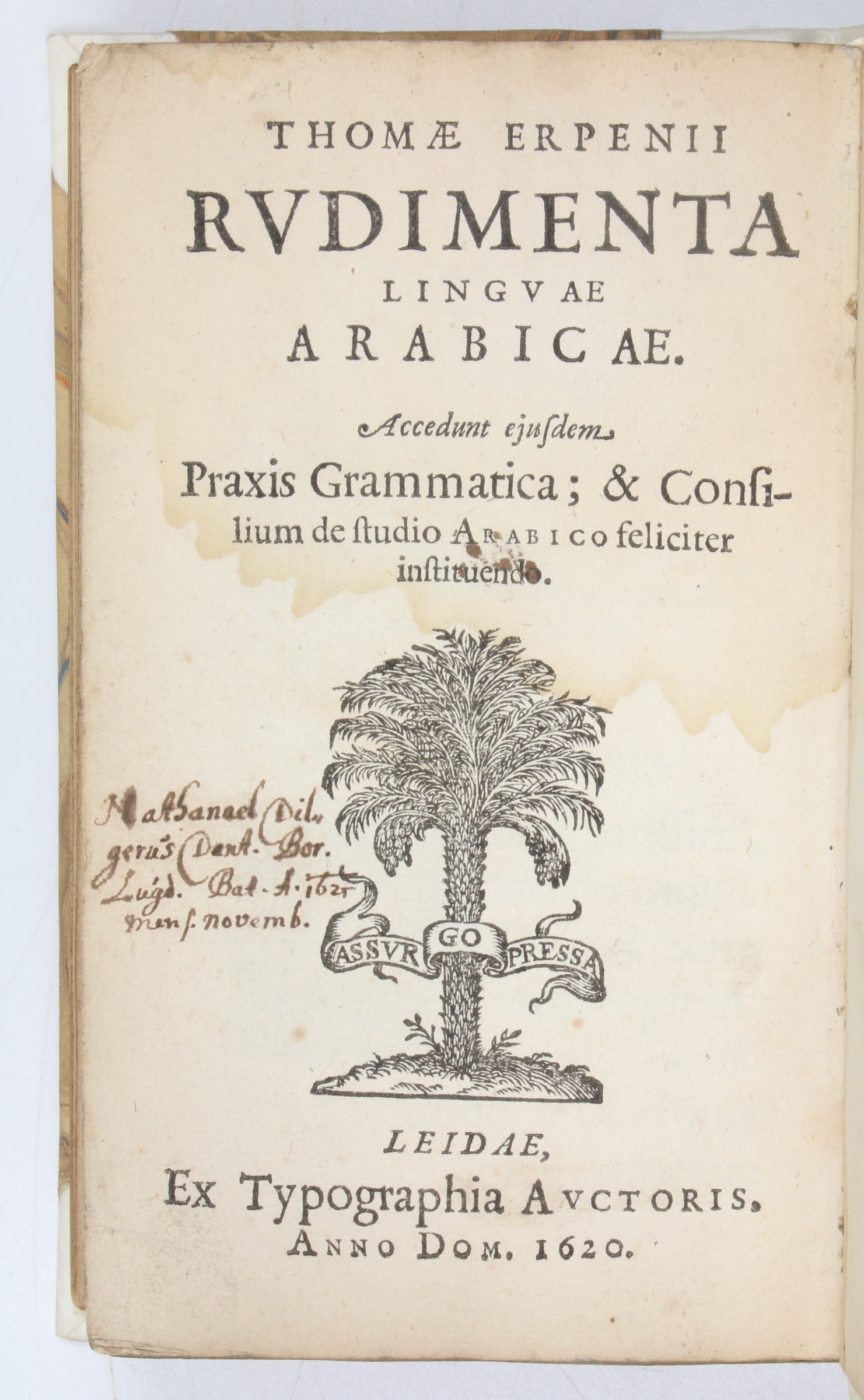
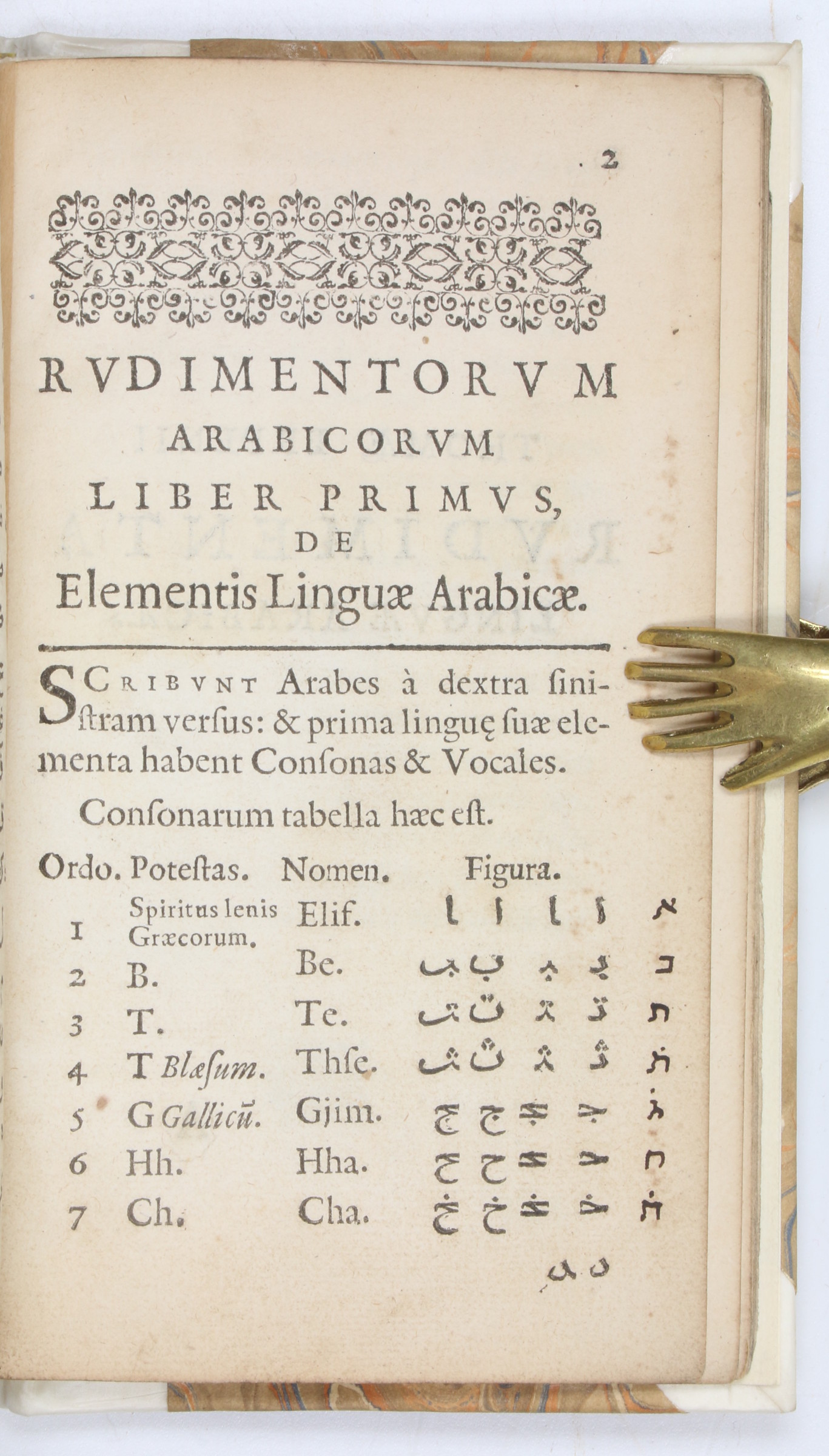
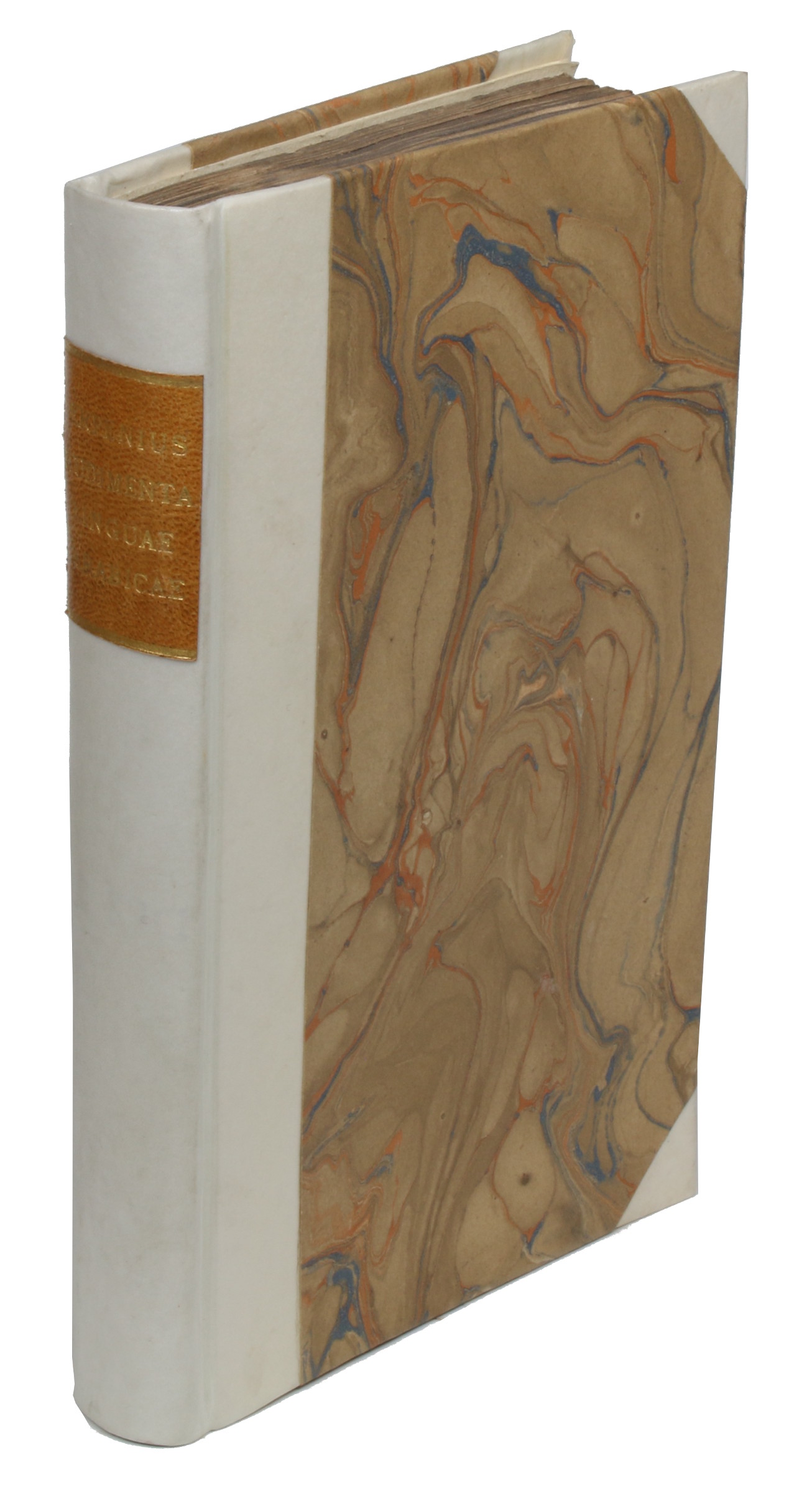
Rudimenta linguae Arabicae. Accedunt eiusdem praxis grammatica; & consilium de studio Arabico feliciter instituendo.
8vo. (16), 184, (56) pp. With woodcut printer's device on title-page. Modern half vellum with marbled covers.
€ 4,000.00
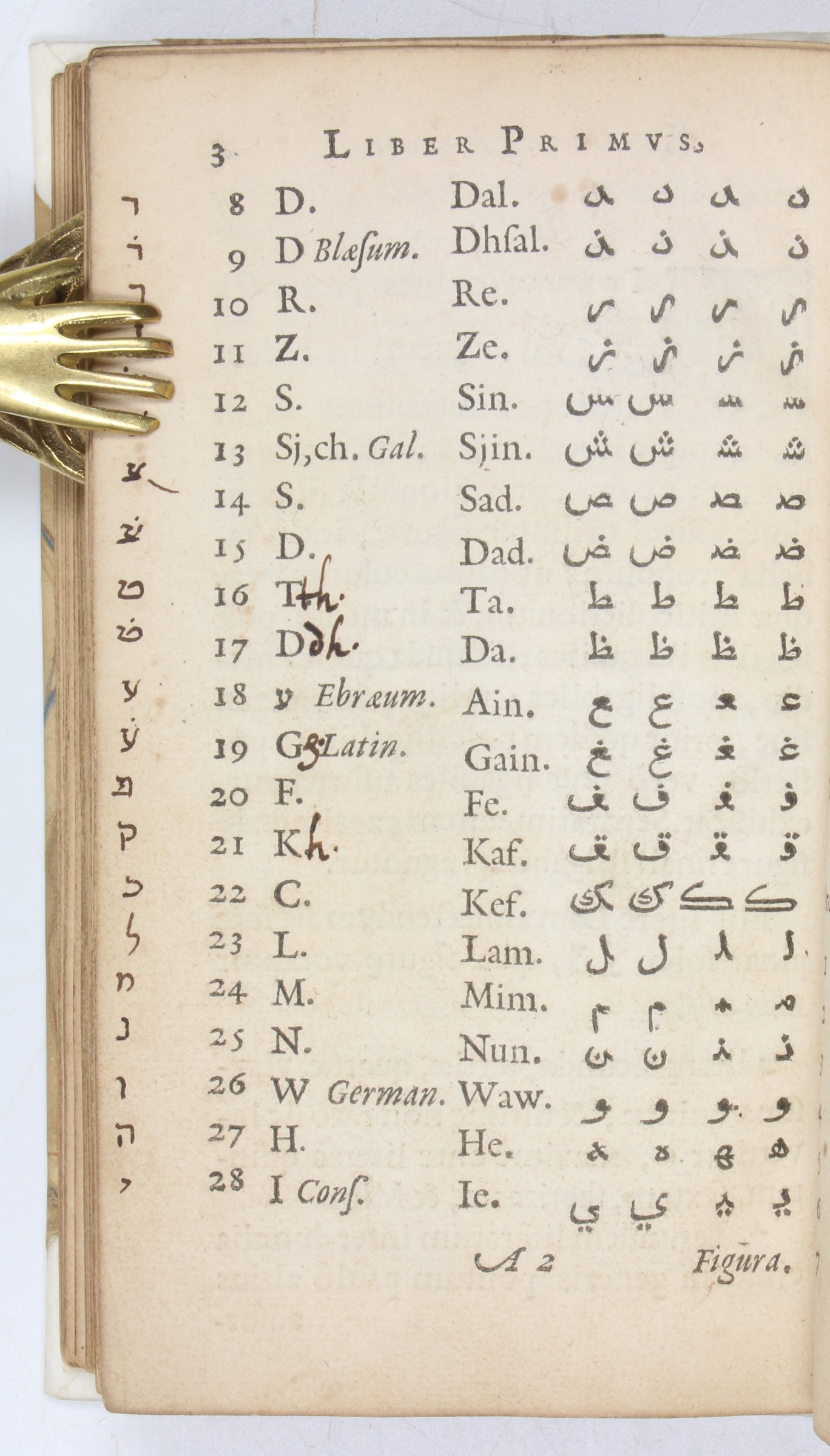
First edition. "The work opens with the well known 'Consilium de studio arabico feliciter instituendo' here published for the first time. At the end is given a 'Catalogus librorum arabicorum', compiled by Erpenius and Coddaeus, and listing most of the work concerned with Arabic published so far. It is one of the sources for the alleged Koran printed in Venice ca. 1520" (Smitskamp). Remarkably, the author printed his introduction in the Arabic style, from right to left. Erpenius (1584-1624), professor of oriental languages at Leiden, "is one of the men whom the study of oriental languages owes its resurrection [...] He set up his own printing shop with Hebrew, Arabic, Syrian, Ethiopian, and Turkish type" (cf. ADB). Until well into the 19th century his works, published in numerous editions, remained the foundation of Arabic language teaching in the West.
From the library of the Danzig Lutheran Nathanael Dilger (1604-79) with his marginalia and autograph note of acquisition, dated November 1625, on title page.
A few underlinings and marginalia in Latin and Arabic. Some waterstaining.
Graesse II, 499. Hoefer XVI, 309. Schnurrer 55. Smitskamp 88. ADB VI, 329 ("1628" in error). Cf. Ebert 6914. Gay 3400 (later ed.). Brunet 1050 (later ed.).
Related
-
The Arabick Alphabet; or, an easy introduction to the reading of Arabick. …Newcastle, 1809.
€ 4,500.00 -
Nomenclator Syriacus.Rome, 1622.
€ 2,500.00 -
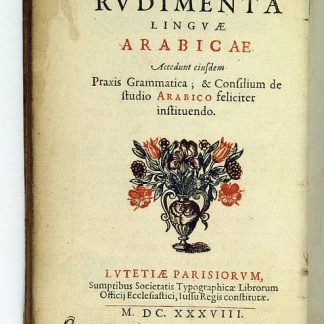
Rudimenta linguae Arabicae. Accedunt eiusdem praxis grammatica; & consilium …Paris, 1638.
€ 2,500.00 -
![Catalogus centuriae librorum rarissimorum manuscript. & partim impressorum, Arabicorum, Persicorum, Turcicorum, Graecorum, Latinorum, &c. Qua anno MDCCV Bibliothecam Publicam Academiae Upsalensis auxit & exornavit [...] Ioan. Gabr. Sparvenfeldius.](https://inlibris.com/wp-content/uploads/2020/04/img-bn28908-324x324.jpg)
Catalogus centuriae librorum rarissimorum manuscript. & partim impressorum, …Uppsala, 1706.
€ 1,500.00